Exploring Pop Art

“They always say that time changes things, but actually you have to change them yourself.”  Andy Warhol

We have had a fascinating week exploring Pop Art and experimenting with different painting techniques.

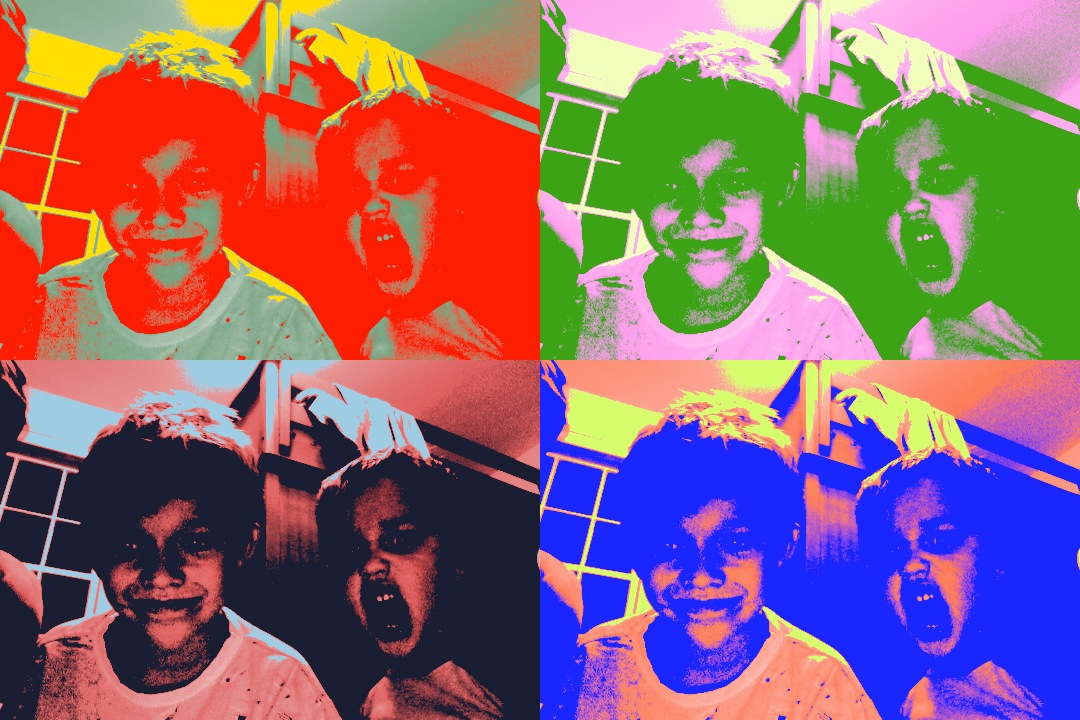
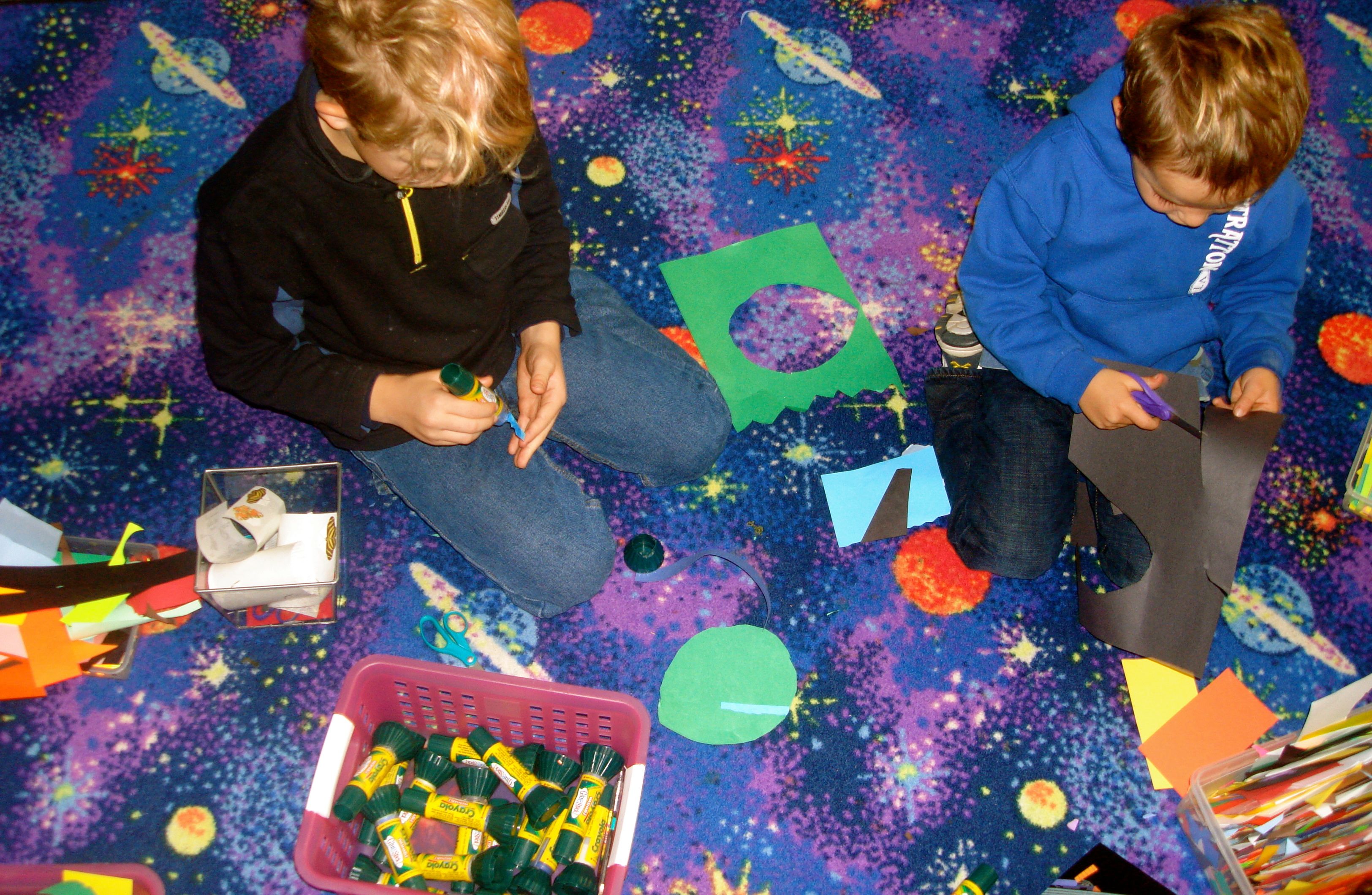
Bounce and Scooter were entranced with Warhol’s colorful rendering of common objects.

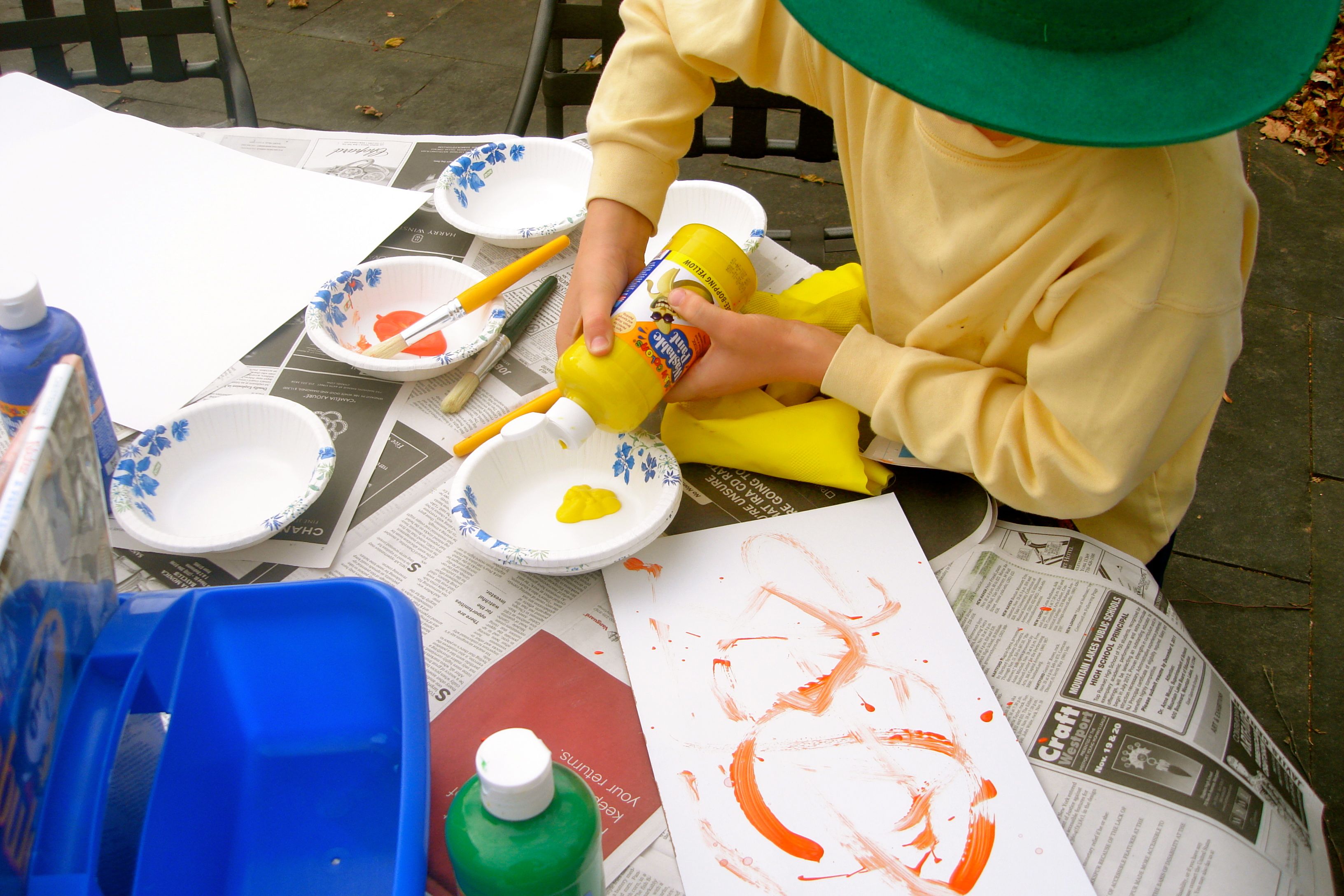
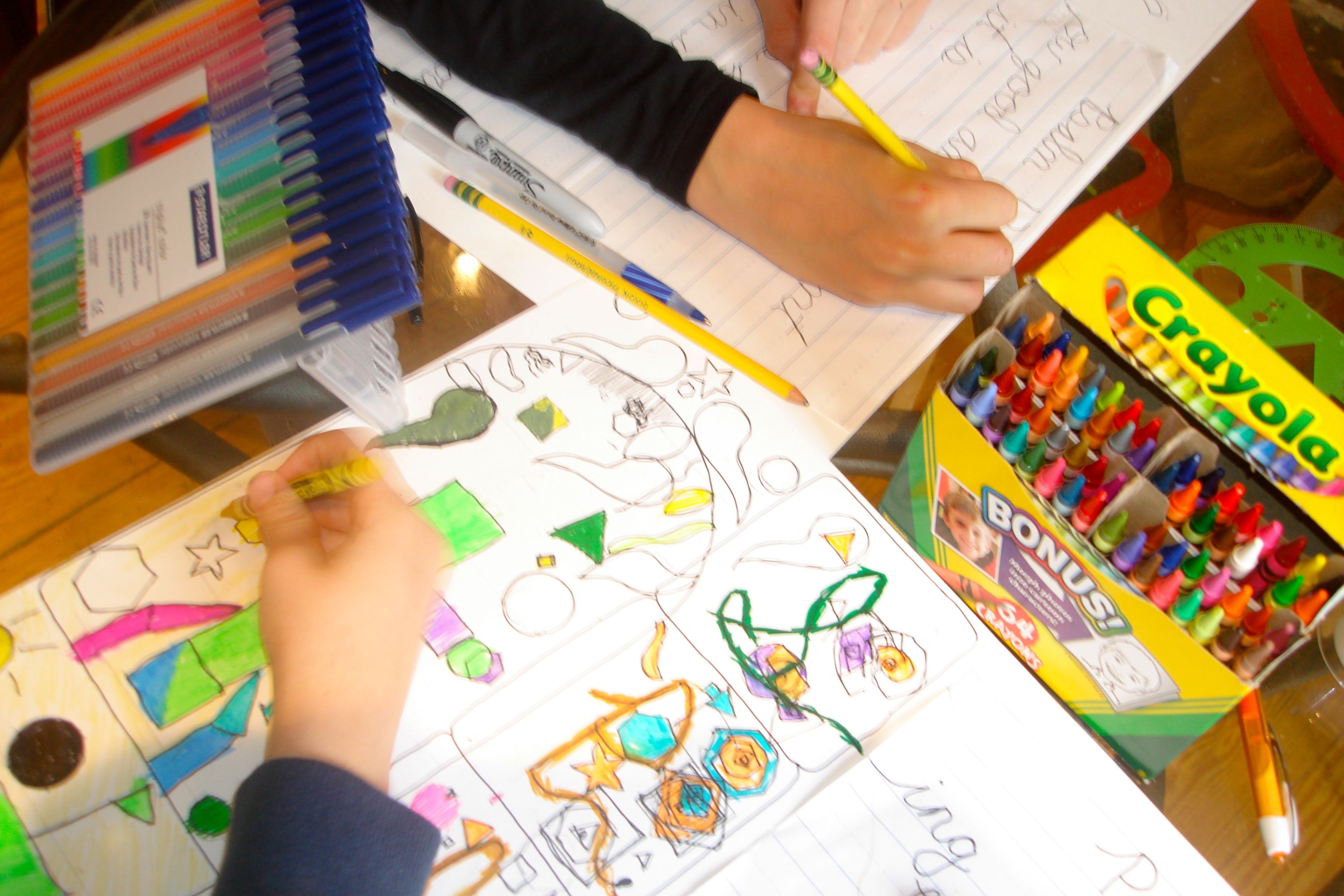
Bounce abstract with hands

They loved the repetition and cartoon-like simplicity of Warhol’s silkscreen paintings.

We also read some simple biographies of Warhol’s life.  Bounce and Scooter sympathized with his childhood illness.  Quantum was more impressed with Warhol’s “partying” lifestyle and popularity as an adult cult figure.

We concentrated on learning to mix colors and mix media.

Bounce’s favorite style was the Jackson Pollock splatter paints.  He had a great time splattering paint and adding random leaves and twigs to enhance the texture of his paintings.

Jackson Pollock

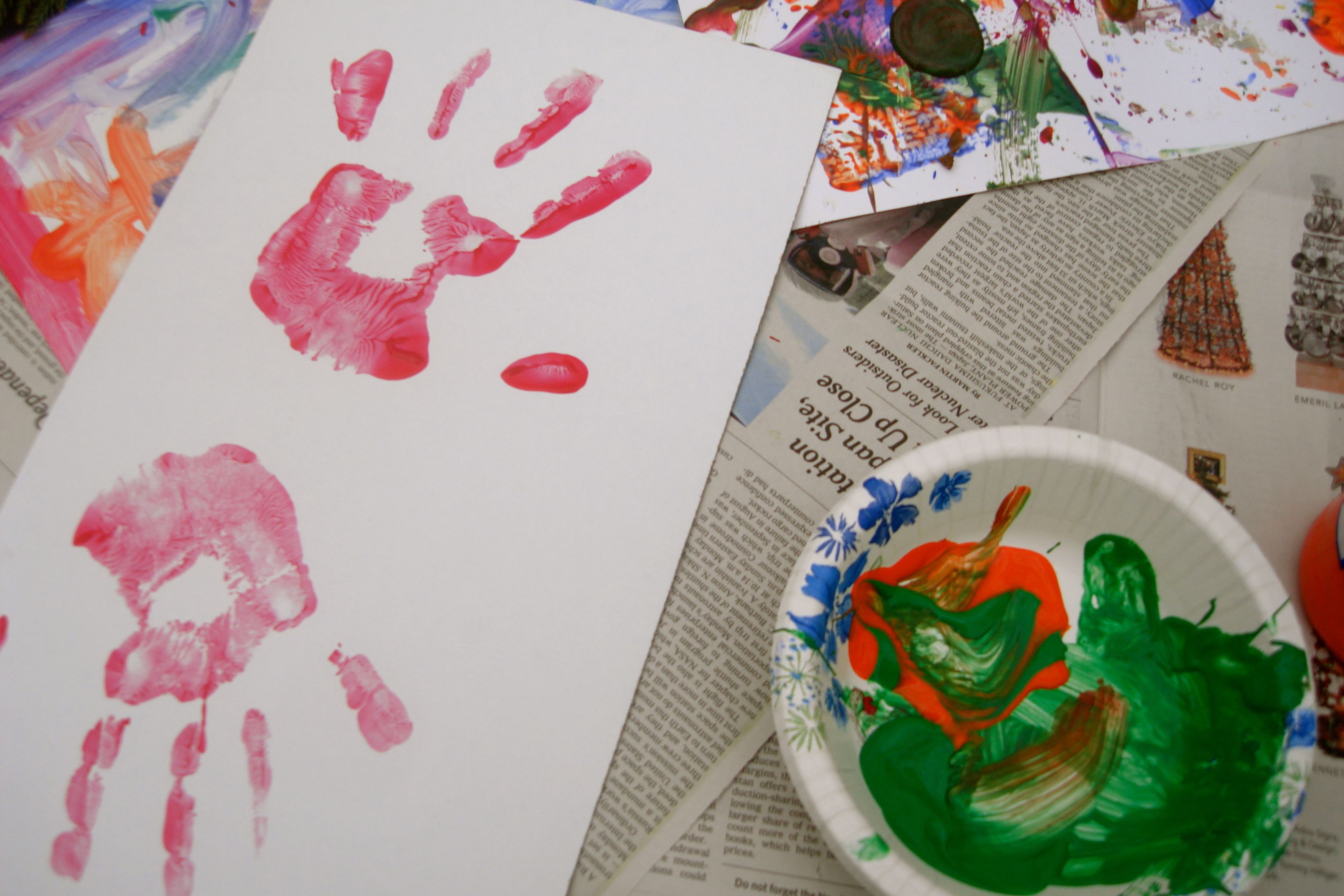
Bounce abstract

Jackson Pollock Number 18

Bounce Abstract Number 2

We had fun comparing Pollock’s work with Bounce’s paintings.  We discussed that although it might be easy to imitate the works of famous pop artists, these ideas were once considered original.

Roy Lichtenstein Drowning Girl

Warhol, Pollock, Lichtenstein and others were among the first to create “art” with modern commercial techniques and images.

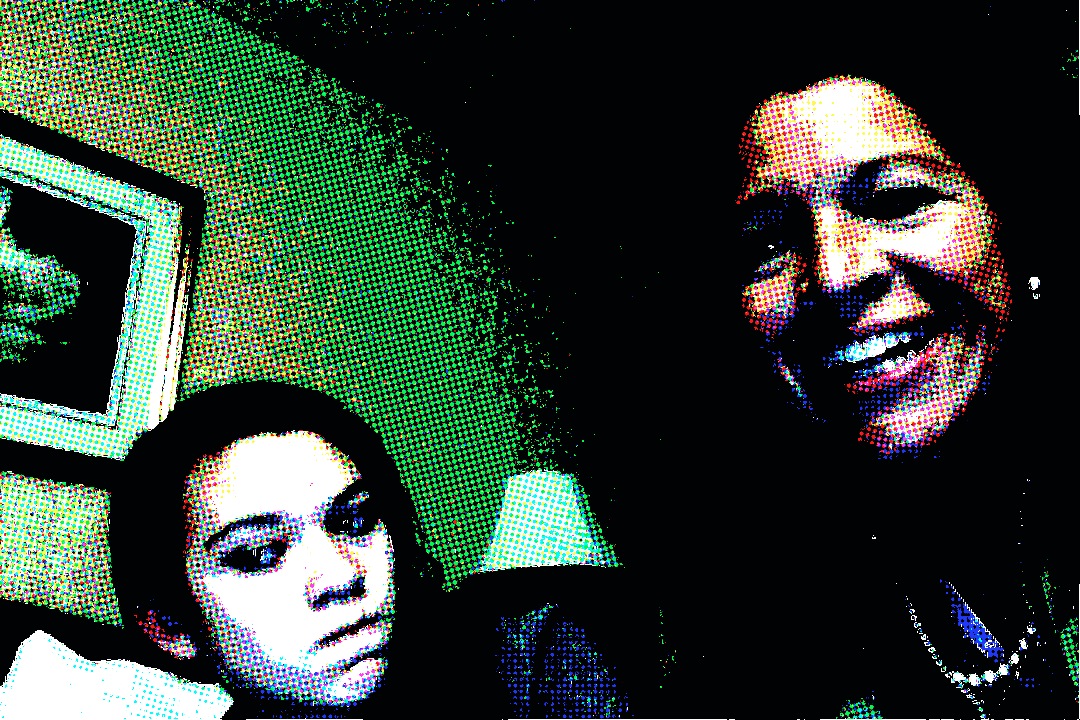
Athena: Girl and Mother

Athena loved creating pop art images of her family and friends.  She loves the irreverence of these images and the way an ordinary photograph can tell a story that is different from the original.

And isn’t that what art is really about?

All artists, in every media, strive to take a moment of reality and transform it into a story that highlights a unique world vision.  Art is an attempt to redraw the everyday so that important details are highlighted and specific ideas are communicated.

Let Me Count the Days:  Homeschooling is teaching our children to tell their own stories through art, creative writing and drama.

Wordless Wednesdsay: Leaves of Fall, Inspired by Walt Whitman

“Happiness, not in another place but this place…not for another hour, but this hour.”
Walt Whitman

“Do anything, but let it produce joy.”― Walt Whitman, Leaves of Grass

“Not I, nor anyone else can travel that road for you.
You must travel it by yourself.
It is not far. It is within reach.
Perhaps you have been on it since you were born, and did not know.
Perhaps it is everywhere – on water and land.”
Walt Whitman, Leaves of Grass

“In the faces of men and women, I see God.”

“Be curious, not judgmental.”
Walt Whitman
Let Me Count the Days: Homeschooling is finding joy in the everyday beauty of life.

Washington Whirlwind

This weekend was a perfect whirling dervish of art, history, science and Happymess thrills and chills.  We had our highs and lows, and now as the new week begins, we can’t quite believe it happened in just 48 hours.

Hirshhorn Waterfall, Washington DC (Allia)

Happymess kids begin their Washington, DC adventures.

 Hirshhorn Museum in Washington, DC. 

This is the first time that all 102 of Andy Warhol’s Shadow paintings are being presented together.  They make an impressive array along the curve of the gallery, with various shapes and colors playing off one another.

Andy Warhol Shadows Exhibit

Initially, Happymess kids were slightly surprised by the modern art offerings.

“Where are the emperor’s new clothes?”

Athena, formerly Creatress, “It’s really great seeing all these paintings together.  If you just saw one or two you would assume he (Warhol) really didn’t put anything into it, but when you see so many (of the same image in different colors) you realize that he really did work hard after all.”

Allia thinks, Hmm.  If one image doesn’t impress, why then are 102 more effective? Or, mathematically speaking, what is 102 times zero?

Bounce, “The great thing about art is you really can’t do anything wrong.  You just make it (art) whatever way you want.”

Allia, “Yes, that is exactly right.  Art is whatever you want it to be.”

Scooter, shouting indignantly from his stroller, “These paintings aren’t art.  They’re just scribbles!”

Out of the mouths of babes….

In fact, we had a great time at the Hirshhorn galleries and enjoyed many of the extremely colorful and playful ways the artists expressed themselves.  We took numerous photographs and had many novel ideas for art projects of our own, including set design ideas for some upcoming Happymess theater competitions.

Modern art offers terrific freedom of thought and expression.  The older Happymess kids felt empowered by the boldness of thought.  The younger Happymess kids were relieved to see that perfection is not a requirement for artistic creation.

National Museum of African Art

Our next stop was the Museum of African Art.  Here we were truly inspired by the variety and depth of expression throughout the exhibits.  Athena is currently writing a script that takes place in Africa.  She perused every detail looking for set and costume design ideas and studied videos of African dances.

Bounce and Scooter were thrilled with the hands-on activities.  Scooter is coloring African masks and headdresses.  Later this winter we will be creating these same masks and headdresses out of paper-mache.

Bounce was intrigued by an illuminated kaleidoscope.  He is working on a science project involving solar energy and lighting with his Destination Imagination team.

The Museum of Air and Space

These exhibits really focus on man’s determination to conquer air and space travel.

Again, Bounce and Scooter preferred creating their own aerodynamic space ships and airplanes.

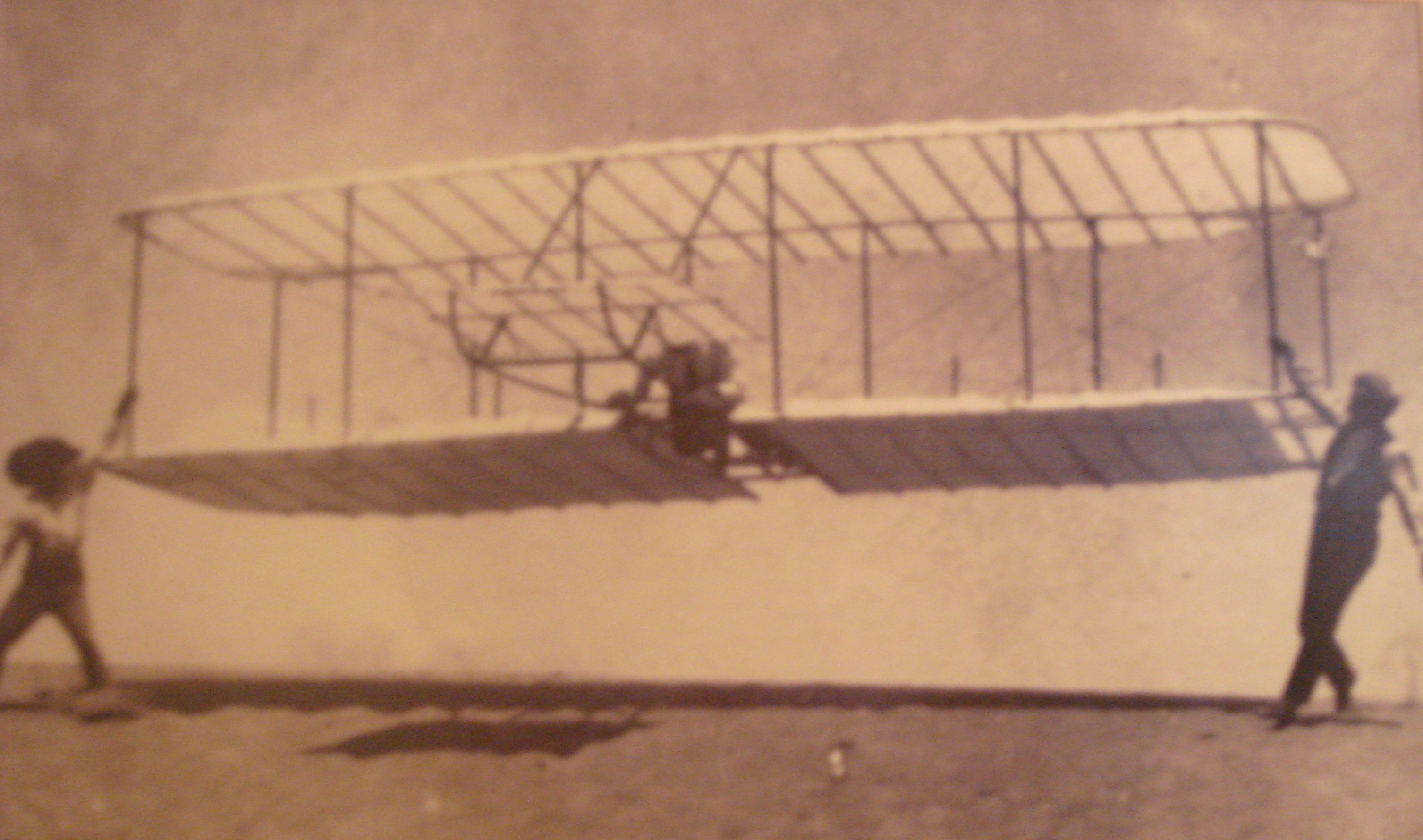
Athena was busy studying the Wright brothers and their first attempts at flight.

She will use this information for her National History Day competition entry.

Misadventures

It was a long and exhausting day, as you can imagine.  We were delighted to finally return to our hotel so that we could relax and plan our evening activities.  Being a Happymess family, we should have known better.

Just as we were getting ready for dinner, Scooter became very ill and we had to rush him to the hospital.  I will not bore you with the long evening I spent in the emergency room.

By the next day he was feeling much better and we had the opportunity to play Chutes and Ladders together (for hours).

Ancient Indian game of Snakes and Ladders

This game is based on the ancient Indian game of Snakes and Ladders.  The intention was to teach morals and manners while entertaining tiny tots.

The beauty of this simple game is that it encourages young children to play fairly.  The desire to cheat seems to be irresistible.  Scooter tried every which way to put himself on a ladder while sending me down the chute.  We may need to introduce this game into our regular Happymess curriculum.

Johns Hopkins Study of Exceptional Talent

Meanwhile, while Scooter and I were whiling away our time at Georgetown University Hospital, the Happymess crew had move on to new adventures.

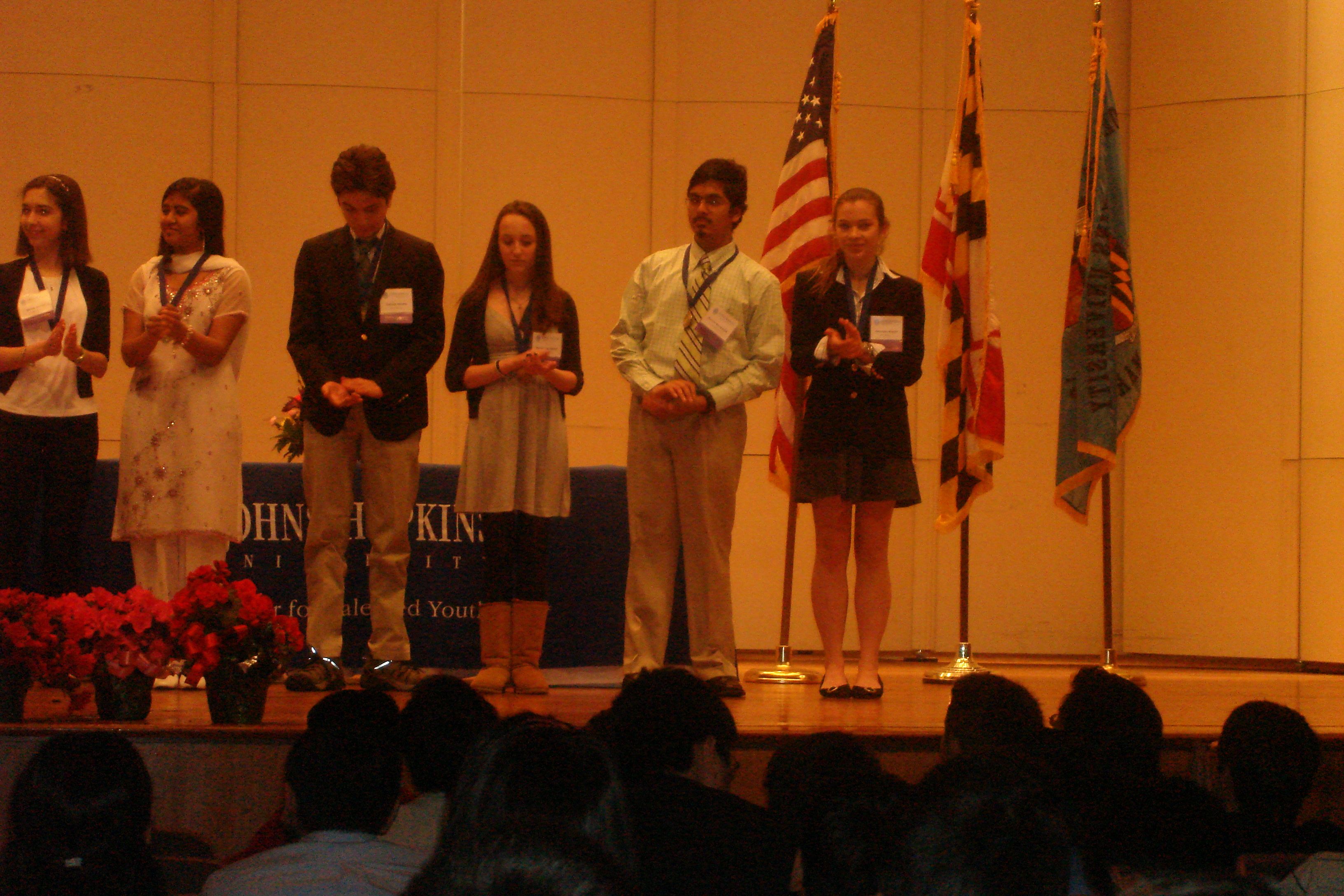
Athena received an award at the Grand Ceremony of SET at Johns Hopkins University for her outstanding SAT scores, taken at age 14.  She received First in Country and First Internationally (tied with many other children from around the world).  We are very proud of her accomplishments.

Boy Scout Wilderness Survival

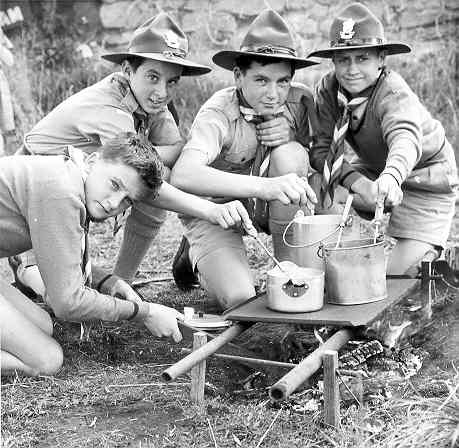
During this very same weekend, Quantum and Truth were learning camping and orienteering skills in the hills of Massachusetts.

Washington Whirlwind (Allia)

Let Me Count the Days:  Homeschooling is experiencing art, history, science, camping, an international award and the local hospital in one 48-hour period!

The Illuminated Manuscript: Using Art and History to Teach Cursive

The study of cursive writing is not merely relegated to the tedium of copying specific letters.  It is the ability to create beautiful manuscripts and illustrations in which words are as important as images.

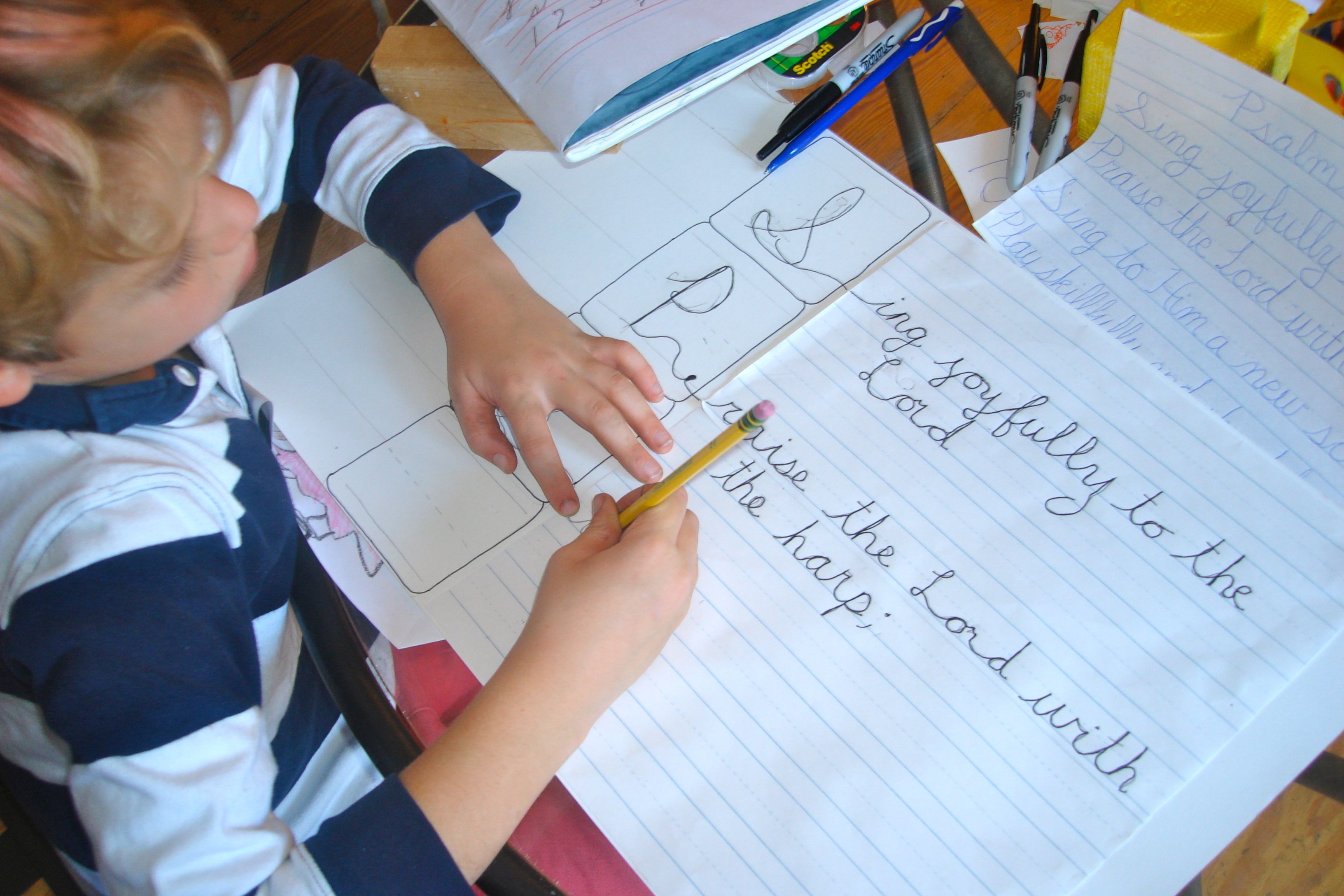
As with all our subjects, we began with the technique and then quickly segued into the role of cursive writing in history, art and religion.  Bounce started his cursive career with our Zaner-Bloser Handwriting Book 2C.  He copied the entire manuscript and cursive alphabets, both upper and lower case.  He then had the opportunity to write and read a few simple sentences.  He worked carefully and was off to a fine start.

He concentrated. Some words were more legible than others, but all words unarguably wiggled across the page in a confident and loopy cursive.

Eager to inspire Bounce with the beauty of writing, we began our study of cursive by looking at the root word, script, whose origin lies in the word scribe.  A scribe is quite simply, one who writes.  Before the advent of the printing press, and now publishing and the internet, there were scribes who perfected the art of copying.  Writing was a true art, one which demanded both accuracy and beauty.

http://www.aucklandcity.govt.nz/dbtw-wpd/virt- exhib/realgold/Images/rossdhu.jpg

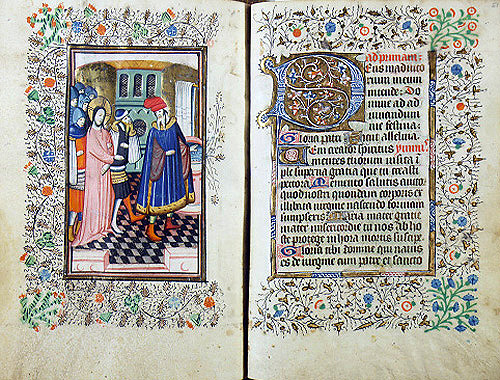
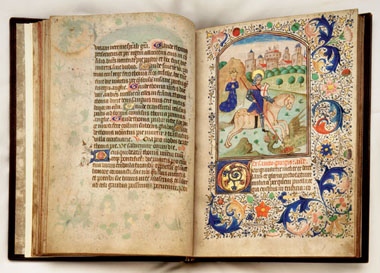
Nowhere is beautiful writing more evident than in the illuminated manuscripts and Book of Hours of the Middle Ages.

We studied these manuscripts and noticed several things.  Bounce recognized immediately that the first letter of each page was enlarged and elaborately decorated.  We also noticed that the colors were bright and beautiful.  The designs were primarily geometric or inspired by nature emphasizing elaborate curves and swirls.

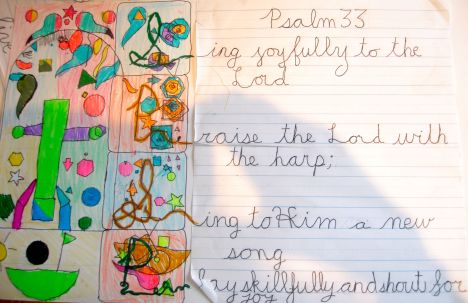
Our Happymess art, history and cursive project is to create our own illuminated manuscript page.  Bounce was excited about this project because he loves drawing and creating beautiful pictures.

Handwriting Without Tears?  We had no tears at all with this project.  Bounce was motivated to write in cursive because he wanted to create his own Book of Hours.  We chose a simple short verse, Psalm 33.  We chose a psalm because we wanted to be historically accurate.  The Book of Hours was a personal book of prayer.  I abbreviated the psalm so it was short enough for Bounce to copy, and emphasized points he could easily understand:  singing, praising and playing.

Psalm 33

Sing joyfully to the Lord

Praise the Lord with the harp;

Sing to Him a new song;

Play skillfully, and shout for joy

Bounce created a “page” which highlighted the first letter of each line so that he could also “illuminate”.

In between each line of scripture (there’s that word root again), Bounce hopped on his bike and rode around the yard.  This gave him plenty of exercise while he was learning the art of cursive.

Truth liked the look of the project and decided to make a page of his own.  For Truth’s page we abbreviated Psalm 133 and chose lines that would have meaning for Truth.

Psalm 133

How good and Pleasant it is

When brothers live together in unity!

For there the Lord bestows his blessing,

Even life forevermore.

Truth decorated his page with an elaborate picture of brothers camping in the wilderness.  He and Quantum will be camping together this weekend, so that seemed appropriate.

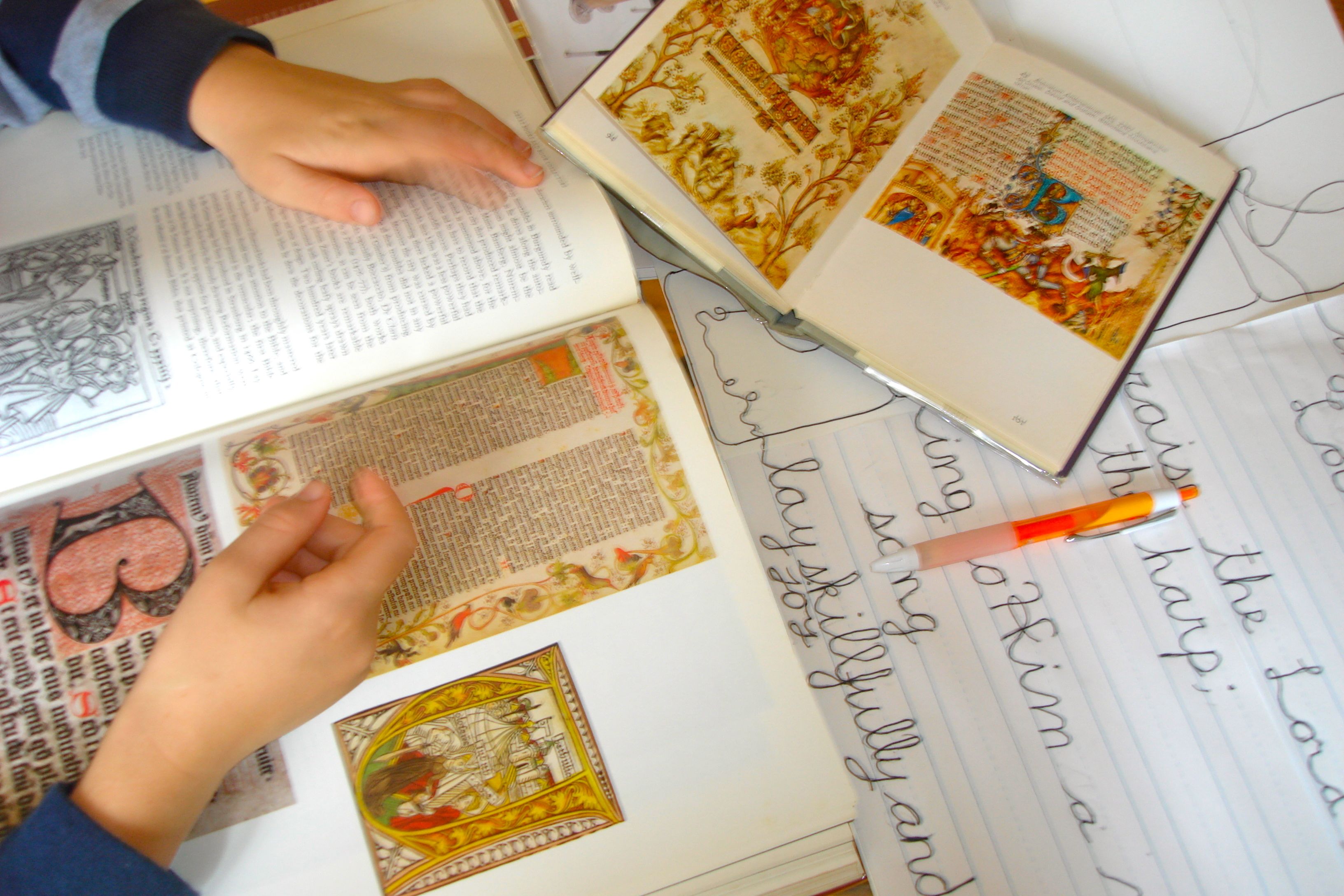
Truth also read aloud several sections from our book on the history of the illuminated manuscript.  We found that the majority of illuminated manuscripts were written between 1200 and 1450 (advent of the printing press).  They were primarily created in the scriptoria of a monastery.  Most illuminated manuscripts were Bibles or personal prayer books, such as The Book Hours.

Vocabulary for this lesson:  Scriptoria, containing the word script, derived from the word scribe.  A scriptoria (similar to cafeteria) is the place within a monastery where the writing takes place.

Cursive, derived from Medieval Latin: cursivus, literally “running”,

Geometric, designs using mathematical shapes

Symmetry and symmetrical, designs with equally appearing elements presented in a balanced design.

Let Me Count the Days:  Homeschooling is teaching cursive as an art form, not a workbook exercise.

Poetry and Leaf Painting: We Too Can Make Beautiful Colors

With the striking fall leaves surrounding us, and the warm Indian summer sunshine toasting the autumn season, today seems like the perfect day for leaf painting.

We started by gathering the last of the hardy green leaves that are still stubbornly clinging to bushes and vines.  The larger leaves, with a sturdy vein structure, work the best.

Next we coated each leaf, on the vein side, with different colors of tempura (washable) paints.

Bounce and Scooter used their painted leaves to create block prints on paper.  They really enjoyed making rainbow leaves.

Rainbow is Bounce’s favorite color.

Leaf abstract

Poetry seems like a natural extension of leaf painting.  We read many poems about fall.  This one is our favorite.

Autumn Fires by Robert Louis Stevenson, A Child’s Garden of Verses, 1885

In the other gardens
  And all up the vale,
From the autumn bonfires
See the smoke trail!
Pleasant summer over
And all the summer flowers,
The red fire blazes,
The gray smoke towers.

Sing a song of seasons!
Something bright in all!
Flowers in the summer,
Fires in the fall!

Author of Bounce's Book of Poetry (Allia)

Bounce wrote numerous “leaf” poems.  He also wrote, “Bounce’s Books of Poetry”

Here is Bounce’s favorite from his personal collection.

Fall Leaves

 Leaves, Leaves, Leaves

 Sprinkle colors as they fall

 Reds and yellows, blues and greens

 Building piles for us all


 Jump, Jump, Jump

 Leaves crackle in the breeze

 Nipping at your nose

 As your toes begin to freeze

Let Me Count the Days:  Homeschooling is welcoming the new season with Art and Poetry.

The Poem: A Costless Lesson Plan for the Thrifty Homeschooler

We have found that a simple poem, quote or Bible verse can provide hours of education across several disciplines.  The cost?  Absolutely nothing.

The Water Harp (Allia)

I like the following poem as it has an educationally relevant message

There is no frigate like a book   

To take us lands away,

Nor any coursers like a page   

Of prancing poetry.   

This traverse may the poorest take        

Without oppress of toll; How frugal is the chariot   

That bears a human soul!

By Emily Dickenson

We begin our lesson with handwriting.  The students copy this poem using their best possible handwriting.  We do this with a pencil so that individual letters and words can be reworked without ruining the whole.

Notice that each line of poetry begins with a capital letter.  Be sure your writers copy the correct punctuation.  Poetry often uses commas to indicate a continuity of thought, despite a line break.

Next we study vocabulary.  Be sure your reader knows the meaning of each word:

Frigate, nor, coursers, prancing, traverse, oppress, toll, frugal, chariot, bears

Have your students copy each word and its dictionary definition.  Be sure they know the spelling of each word and use it in a sentence of their own.

Example:

Frigate: a fast navel vessel of the late 18th and early 19th centuries, generally having a lofty ship rig and heavily armed on one or two decks.

The pirates were no match for the heavy armament of the frigate and were forced to find smaller prey.

Now try reading the poem aloud.  Listen carefully to the way rhythm is used.

Once every word has been defined we can go back and examine the poem.  What does it mean?  This is great for class discussion.  We talk about the actual meaning, the implied meaning and how this poem makes us feel and think about our own relationship with books.

Now we can study poetry and language.

Wikipedia, not always my favorite source, has an excellent discussion on the history and development of poetry and poetic language

http://en.wikipedia.org/wiki/Poetry

For convenience, I am including a segment here:

Poetry is primarily governed by idiosyncratic forms and conventions to suggest differential interpretation to words, or to evoke emotive responses. Devices such as assonance, alliteration, onomatopoeia, and rhythm are sometimes used to achieve musical or incantatory effects. The use of ambiguity, symbolism, irony, and other stylistic elements of poetic diction often leaves a poem open to multiple interpretations. Similarly, metaphor, simile, and metonymy[5] create a resonance between otherwise disparate images—a layering of meanings, forming connections previously not perceived. Kindred forms of resonance may exist, between individual verses, in their patterns of rhyme or rhythm.

This is an excellent time to teach the meaning of various literary terms.  You may choose to study one term a day.  Learn the definition of alliteration, find examples of it in poetry, then experiment with creating your own sentences using alliteration.  Understanding and using some of the above literary devices will greatly enhance both the students’ comprehension of literature as well as improve their writing technique.

For the purpose of this lesson we will concentrate on the following two literary terms: metaphor and simile. Have your student define each term and then find each example of a metaphor and a simile within the poem.  Have them write one example of each on their own.

Discuss:  How has the use of metaphors and similes enhanced our understanding of Dickenson’s message?

Each piece of literature should be understood within its historical context.  So now it is time for a brief history lesson.  So we ask, who is Emily Dickenson and when did she live?  What forces influenced her thinking, writing style and perspective?

This link will bring you to an excellent, and exceedingly thorough discussion published in The Cambridge History of English and American Literature in 18 Volumes (1907–21).

http://www.bartleby.com/227/0302.html

Emily Dickenson was born in 1830, lived in New England and was surrounded by the Puritan faith.  How did this world vision influence her poetic works?  Did she follow her faith or was she a rebel within her society?  You may want to have a short history lesson on Puritanism and early American values.

It is now time for our writing lesson.  We will begin with the essay.  An essay is a short (depending on the age of your student) formal piece of writing that addresses a specific topic.  We suggest 3-5 paragraphs.  Have your student pick a topic relevant to today’s discussion. This is a good time to introduce the idea of beginning with a topic sentence and an outline.  Be sure the student includes: title, introduction, middle, and conclusion.  The essay can be further enhanced through the inclusion of specific examples, or quotes from sources.  Now you can explain how to footnote, or give credit for cited works.  Recopying the essay is an excellent opportunity to practice both rewriting and handwriting.

An alternative writing lesson is to have your students write their own poem.  Try to have them use metaphors or similes.  You may also ask them to use nature as an inspiration.  Again, have them recopy their poem using their best handwriting.

Every homeschool day must include art, and today is no exception.  Let your student create an illustration for Emily Dickenson’s poem and one for their own poem.  They may want to further decorate their own picture by including their poem (more handwriting) and adding a frame or border.

This final piece may make a beautiful decoration for your schoolroom, or perhaps, your students will have a wonderful gift to share with someone they love.

Another writing exercise can be a journal entry.  Have your students write a personal commentary on what this poem means to them.  Come back to the poem after several months, or towards the end of the school year, and see if the student finds new meaning in the poem.

We are not quite done yet.  You have begun the study of poetry, why not continue with a poetry reading?  Reading aloud greatly enhances literary fluency and diction.  We love to sit by the fire, sip hot chocolate and surround ourselves with piles of poetry books.  Our favorite is a series called Poetry for Young People.

http://www.sterlingpublishing.com/catalog?limit=10&section_key=21-32&offset=10

These books feature classic poets and each page is beautifully illustrated.

Now that your children are exposed to various poems and poets, have them pick a favorite poem.   They should memorize this poem.  Once they have memorized it they can practice reciting their poem.  This is a great time to teach the basics of public speaking:  the importance of knowing your material, speaking clearly, loudly and articulately, remembering to look at your audience, standing straight and remembering to breathe.  Now find an audience, and invite some other homeschooling families to participate and you can host a Poetry Party.  (Note:  great time for your kids to practice their cooking skills.)

Wow!  It has been a busy day!  It must finally be time to play!  See if your students can create metaphors for the world they find outside:

Pumpkin Siblings (Allia)

Example:  The crisp, crunchy leaves of autumn sing of pumpkins and sharp skies of fall.

Let Me Count the Days:  Homeschooling is finding an entire day’s lesson in 7 lines of poetry.

Witch Trip to the Past: Salem, MA

We entered the small town of Salem in search of witches and real life mentions of the characters from the Henry Miller play, The Crucible.

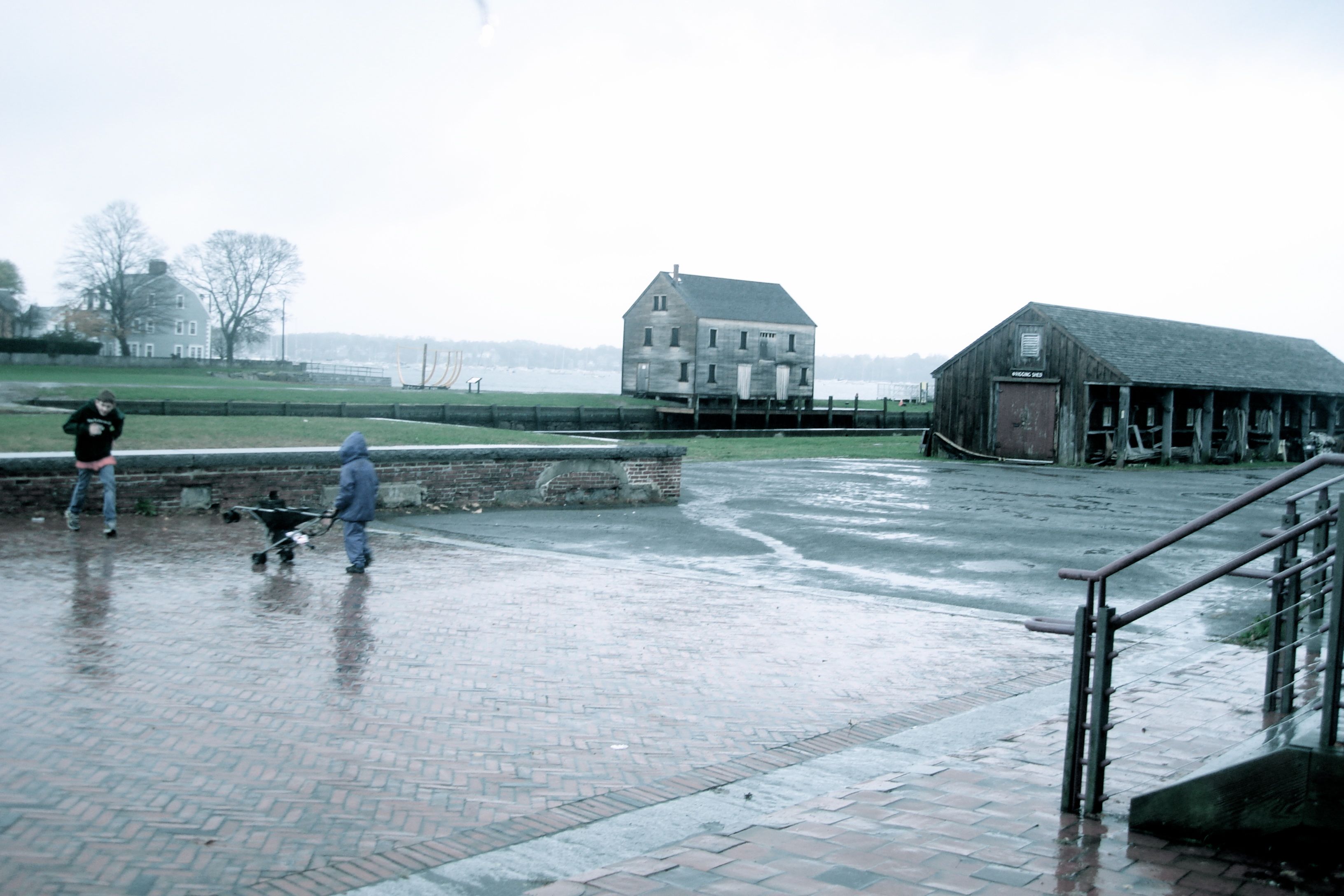
Scooter in the rain, Salem, MA (Allia)

Truth and Scooter explore Salem Harbor (Allia)

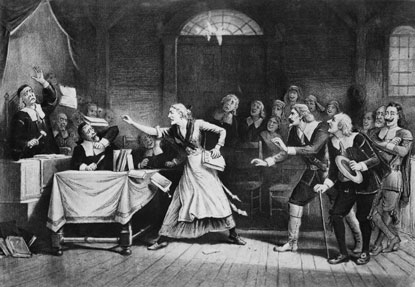
The day was appropriately rainy and gloomy, a perfect match for the mystery we were seeking.  How did this small town, in 1692, bring itself to hang 20 innocent people?  Why did mass hysteria combine with greed and zealous righteousness to allow the “establishment” to commit unthinkable crimes against the people they were suppose to be protecting?

Creatress surveys the marsh, Salem, MA (Allia)

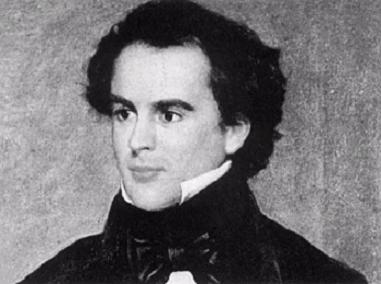
We began our investigation at the birthplace of Nathanial Hawthorne, author of (among other works) The Scarlet Letter and The House of the Seven Gables.  The house was small and plain, like many old New England homes.  During his beginning forays into authorship, Hawthorne was a recluse within this home.  He was insecure and preferred to keep his attempts at writing a secret from his neighbors.  Local legend believes that Hawthorne, originally a Custom House official, was inspired to begin writing after an encounter with a ghost.
The House of the Seven Gables, Salem, MA (Allia)

The second home we visited was that of Nathanial Hawthorne’s cousin.  It is believed that this is the house he used as inspiration for the setting of his mystery novel, The House of the Seven Gables. This house has been restored to enhance its similarity to the Hawthorne’s novel.  It includes a secret staircase that winds around an interior chimney and allows characters (and tourists) to make surprise entrances into various rooms.

Salem graveyeard (Allia)

Hawthorne is the great-great grandson of John Hathorne, the judge who infamously presided over the Salem Witch Trials, condemning so many people to their deaths.  In his preface to The House of the Seven Gables Hawthorne asks if the evil deeds of one’s ancestors reverberate upon future generations.

Speaking in the third person, Hawthorne provides us this insight into his thinking: The author has provided himself with a moral – the truth, namely, that the wrong doing of one generation lives into the successive ones…he (Hawthorne) would feel it a singular gratification if this romance (novel) might effectually convince mankind – or, indeed, any one man – of the folly of tumbling down an avalanche of ill-gotten gold, or real estate, on the heads of an unfortunate posterity. Preface from The House of the Seven Gables

It is probable that Hawthorne is referring to himself.  Hawthorne’s themes often “center on the inherent evil and sin of humanity, and his works often have moral messages and deep psychological complexity.”  The Scarlet Letter exposes the injustice of morality as it is applied to young women during the Puritan era.  We are now eager to read The House of the Seven Gables.

The grave tour was fascinating and creepy.

Salem graveyard (Allia)

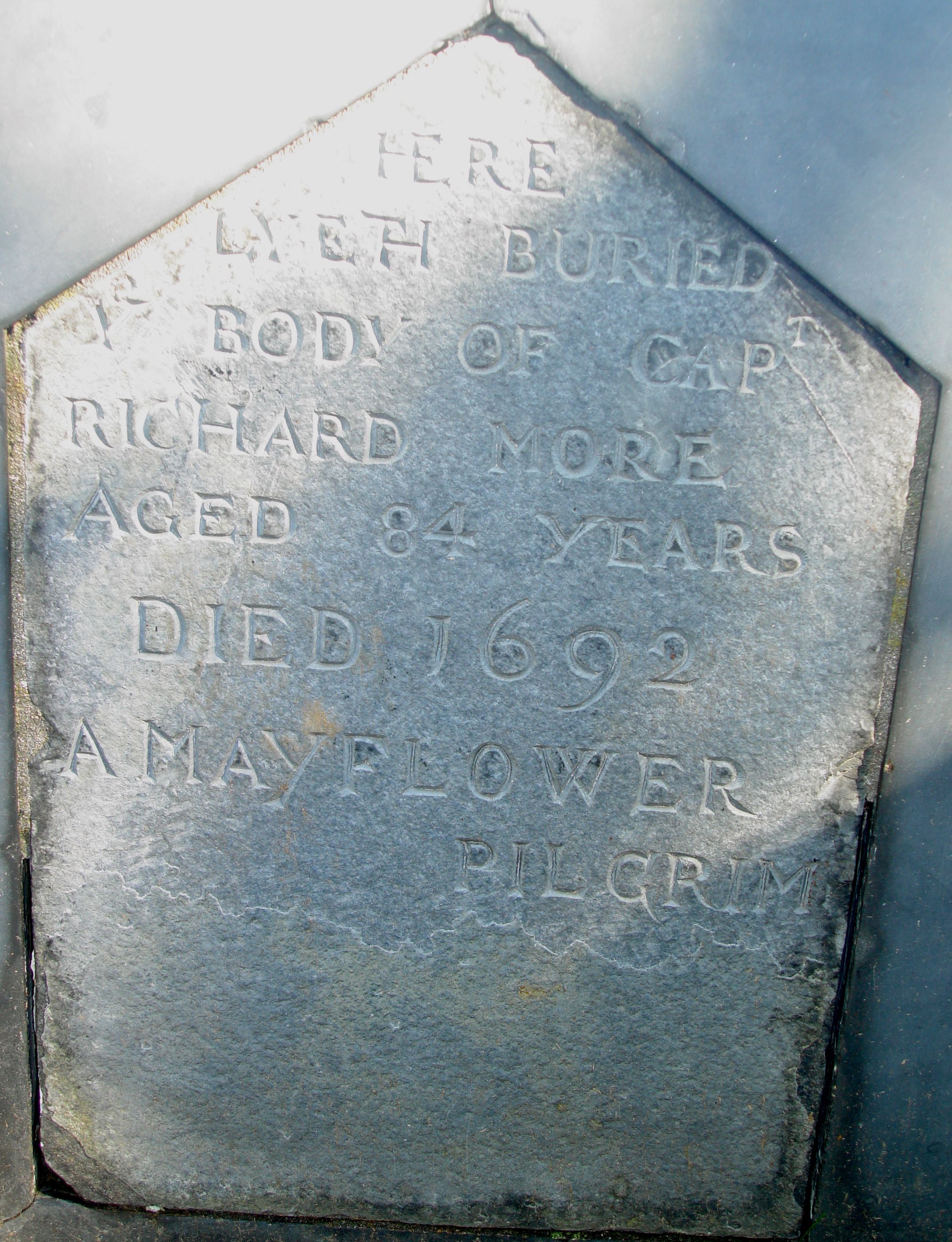
Tomb of Mayflower Pilgrim, Salem, MA (Allia)

We enjoyed seeing John Hathorne’s grave as well as the gravestone of an original Mayflower Pilgrim.

We also saw the Salem Witch Memorial of the 20 men and women that were hanged in 1692.  Here is where we found the Crucible characters come to life (or death).

Lest Terror Be Forgotten

June 10, 1692

Bridget Bishop”I am no witch.
I am innocent.
I know nothing of it.”

July 19, 1692

Sarah Wildes Elizabeth Howe”If it was the last moment I was to live,
God knows I am innocent…”
Susannah Martin”I have no hand in witchcraft.” Sarah Good
Rebecca Nurse”Oh Lord, help me! It is false. I am clear. For my life now lies in your hands….”

http://www.salemweb.com/memorial/

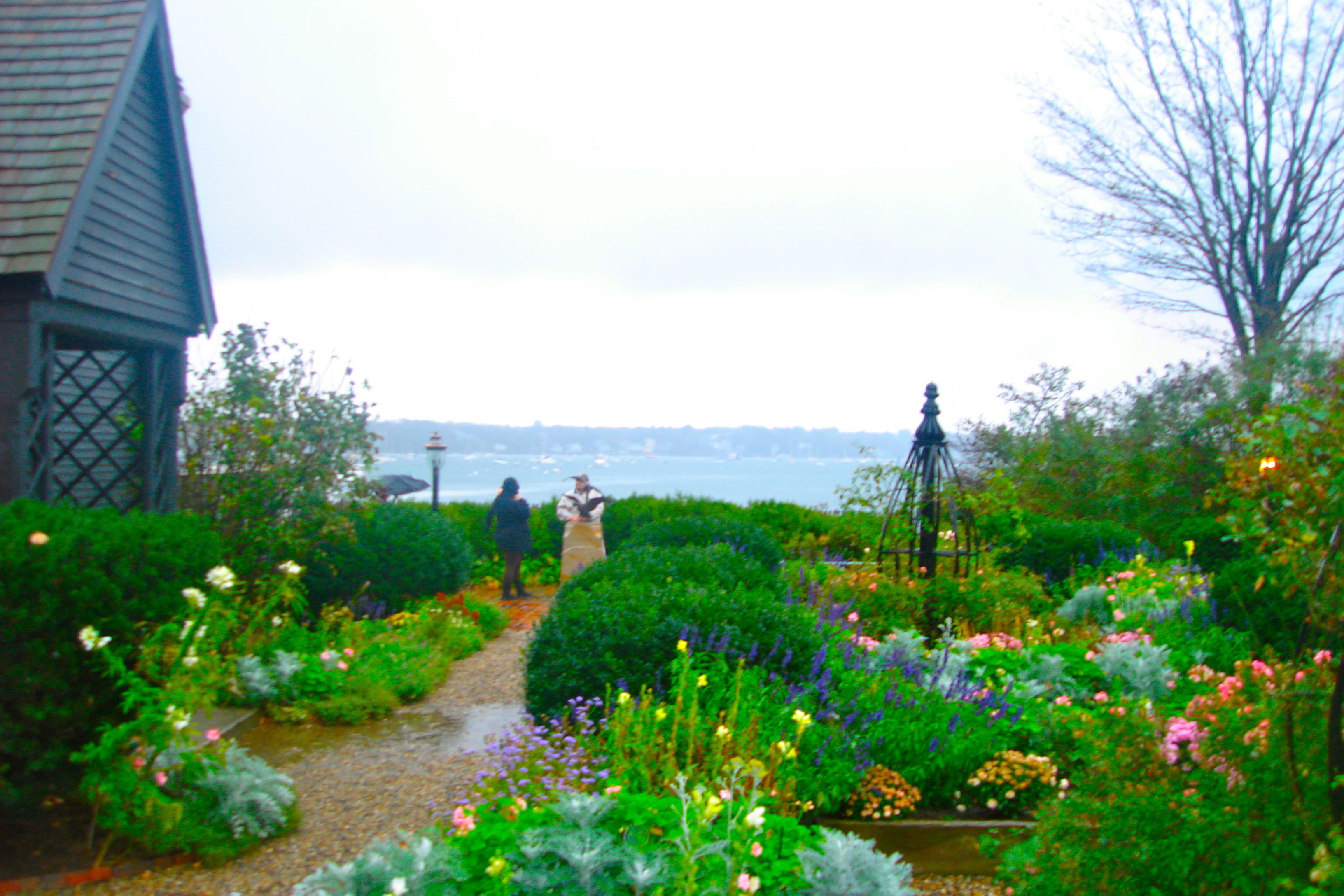
Salem gardens (Allia)

Happymess kids were fascinated with the idea that they could walk on the very same streets and visit the same homes where so many famous events occurred.

Let Me Count the Days:  Homeschooling is visiting the past in the present.

Why I Homeschool: Let Me Count the Days

Have you ever encountered that blank stare when you explain that you teach your children at home?  It seems that homeschooling can be a difficult concept for some ordinary folks to grasp.

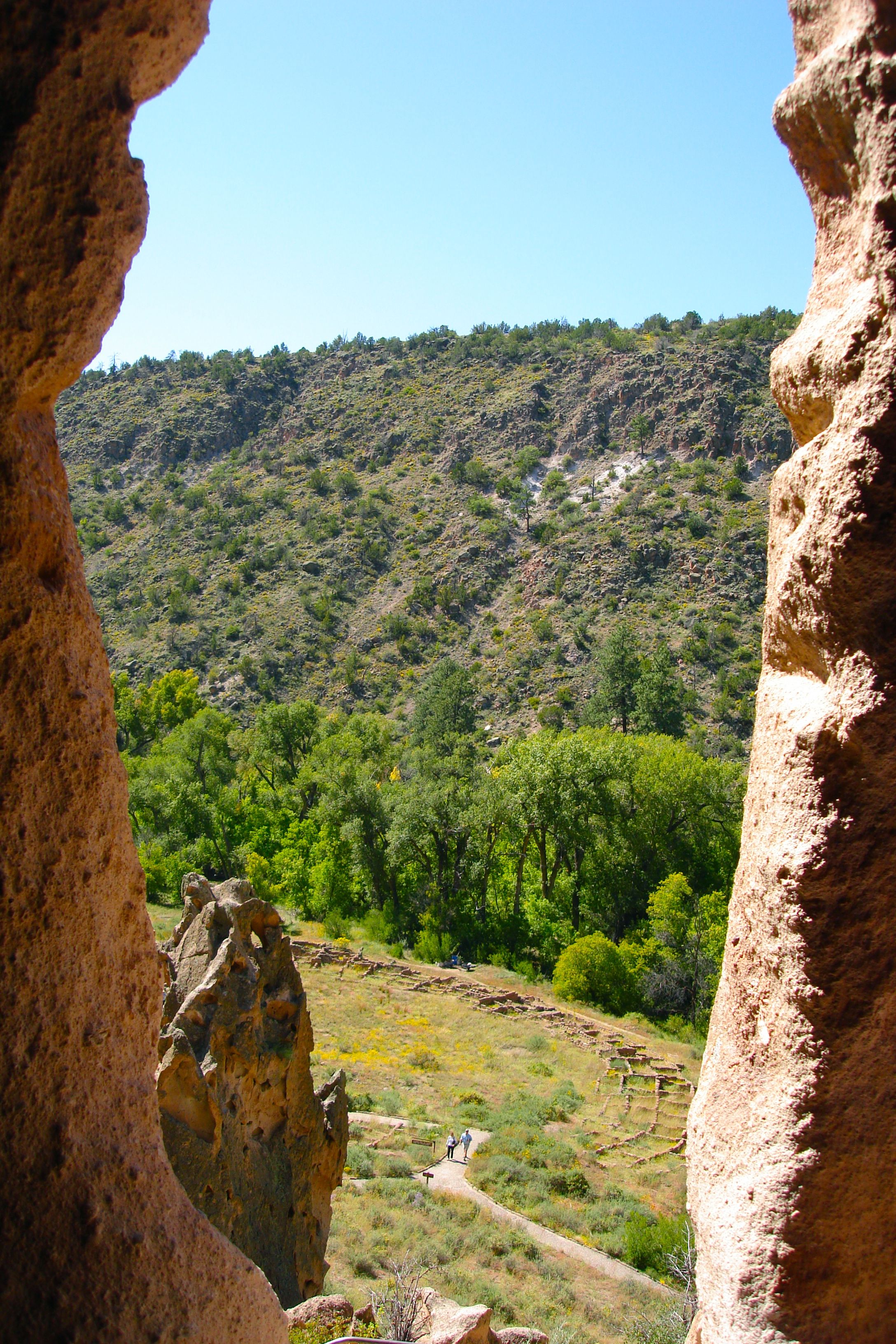
Homeschool: anywhere we happen to be...NM, Allia

At Happymess we have been homeschooling for the past 6 years, and we have loved every minute.  Yes, there have been some difficult days.  And yes, there have been some days that have been less than productive.  But isn’t that always the case?  In general, we have been happy and busy.  We have been learning at home and enjoying the company of one another.  It has been an adventure and a blessing.

Happymess kids Study the Mechanics of Flight

So what is homeschooling (for the uninitiated)?  Happily, homeschooling is different for every single family.  I think this is one of my favorite things about homeschooling.  We can all do it whatever way we want.  This is why homeschoolers make some of the most interesting friends.

Some of us follow specific curriculums, some allow the child’s interests to lead the way and some balance several different approaches.  Homeschool Happymess is in the later category.  We carefully select our topics, choose the best program or book for each topic and combine that with regular “real life experiences” that bring the topic to life.  Our goal is to inspire the student.

Hands-On Learning, NM, Allia

Dare I take the mystery out of homeschooling?  Homeschooling is, simply, teaching your child at home.  It provides the opportunity for positive family relationships.  Homeschooling allows you to focus on the topics and values that you find most important.  When you teach your children at home you can ensure that they actually learn the material, this is one of my favorite aspects of homeschooling.

Like good home cooking, homeschooling allows you to choose the intellectual nutrients that will create a balanced diet and will allow your children to grow and develop into responsible and loving members of their community.

Let Me Count the Days:  Homeschooling is anytime you take responsibility for teaching your child, whether or not they are enrolled in school.  Learning something at home is for every family.

Writing Assignment: Seeing Myself Through the Eyes of Another

Happymess kids are learning to write.  This week Quantum is completing an assignment in which he has to describe himself (in the third person) through the eyes of a grandparent.  Through this process he will additionally be describing the grandparent and will introduce the reader to Quantum as perceived by the grandparent.  Thus, some of Quantum’s positive attributes may be viewed negatively and some seemingly unimportant moments may be accentuated due to the values of the grandparent.

,This story is a fictionalization of an actual encounter, in a restaurant, between Grandfather and Quantum.  Grandfather is delighted that Quantum is dressed appropriately but does not think children should receive too much attention or praise.  This piece is both comical and sad as the two males, at either end of the age spectrum, miscommunicate and misjudge one another.  The opportunity for mutual appreciation is certainly lost through this encounter.  Quantum effectively uses fictionalization to emphasize the mood he strives to create.

Quantum eagerly attempts to share his interests and accolades while Grandfather dismisses these attributes with sharp-tongued staccato remarks designed to remind Quantum of his more junior place at the dinner table.

Said by Quantum, admiringly,  “Grandfather, did you ever get to see Babe Ruth?”

“My father wouldn’t have cared if Babe Ruth was sitting in the backyard!” Grandfather retorts, disparagingly.

Through this exercise Quantum is learning the craft of character description, setting and the use of dialogue and innuendo to create an effective and moving scene.  This writing exercise builds upon real world facts while allowing extensive room for creativity.  The students’ sense of security is enhanced in that initially they are reporting on known events.  The focus on pure creativity is reduced.  As the tale unfolds the student is free to rearrange the details as she/he learns to use words to illustrate the tale.

Garth Williams

This assignment helps to bridge the gap between reality and fiction.  It also helps to illustrate the manner in which fiction can be more truthful than facts.  Sometimes a fictional portrayal of an event more closely reassembles the truth, as perceived by the individual.  Third person self-description in an excellent introduction into the craft of fictional character development and can be employed in a writing program designed for any age student.

Would you be interested in using this technique to expand the writing skills of your students?

What techniques have you used effectively?

Pinocchio: A Captivating Cautionary Tale for Read-Aloud Bedtime

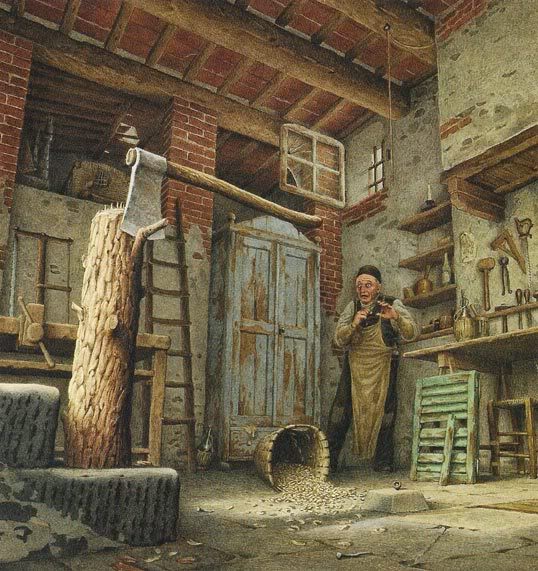
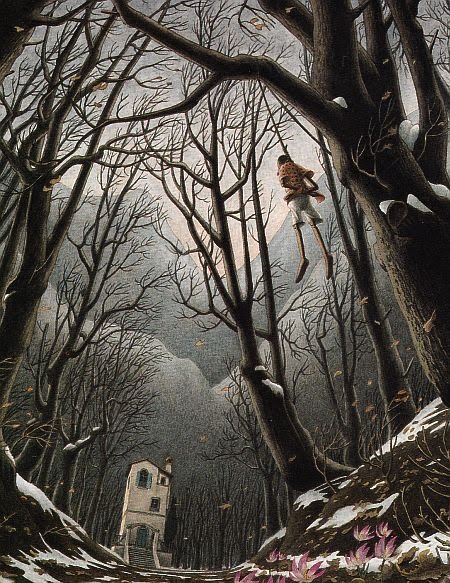
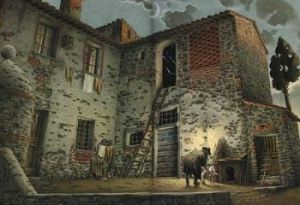
We are not talking about the Disney reincarnation of Pinocchio, a brightly clad young puppet closely resembling Mickey Mouse, who hops about from one misadventure to another.  We are talking about the original, unabridged, version by Carlo Collodi.  I recommend the 1988 Alfred A. Knopf edition illustrated by Roberto Innocenti. The translation is lovely and the vocabulary is challenging but easily understood in context.  What really makes this edition so compelling for young and middle level readers are the illustrations.  Roberto Innocenti’s illustrations are breathtaking.  These are not beautiful pictures.  They are morose, macabre and slightly disturbing.  Children are completely enthralled by the images.  The pictures perfectly complement the edgy dangerous mood of this cautionary tale.

Roberto Innocenti

Here is the original block of wood from which Pinocchio is carved.  The wood maker is shocked to hear the wood crying out in pain each time he attempts to chop it into bits.  In great haste he gives this wood away to Geppetto who will carve the famous puppet from this magic wood.

Roberto Innocenti

Despite Pinocchio’s repeated bad behavior he does have a repenting heart and this is an endearing characteristic.  Here Pinocchio begs the Showman to take his life and spare the life of the Harlequin.  The Showmaster spares them both and Pinnochio has another chance to improve his behavior.

Pinocchio sets off with the best intentions and plans to reconnect with his loving father, Geppetto.  Unfortunately, he is accosted by the wily fox and cat who entice him into burying his gold pieces in the Field of Miracles.

Roberto Innocenti

Let us just say that this encounter leads to nothing but profoundly poor fortune.  Fortunately Pinnochio’s luck will prevail and his ever-repenting nature will continue to procure him a new chance to get on the path toward righteousness.

Roberto Innocenti

Having finally procured his freedom, Pinocchio is once again on his way to see his father.  In his hurry and hunger, having recently escaped from prison, Pinocchio stops to steal some grapes.  He is apprehended and forcibly employed as a guard dog for the local farmer.  His excellent job as an honest guard dog causes the grateful farmer to set Pinocchio free.

Bounce and Scooter reading Pinocchio

This is one of the best read-aloud bedtime stories.  Each night Bounce and Scooter hurry-hurry-hurry to get into bed so we can continue with the Pinocchio story.  They immediately identify with Pinocchio and his bad-boy antics.  They are not disturbed by his predicaments.  They have confidence that he will learn to behave himself and will be redeemed by the end of the story.  Pinocchio, like all  classic tales, has a clear message and honestly reflects the emotions and actions of real-life boys and girls.  This is an eminently satisfying tale of the battle between right and wrong.  Bounce and Scooter know that right will prevail, but it is so much fun to watch Pinocchio easily being mislead in the meantime.