The Phantom Tollbooth: A Novel Approach to Vocabulary Lessons

The Phantom Tollbooth, by Norton Juster, is a modern day classic novel perfect for middle level readers whom you hope to inspire with the desire to expand their verbal and imaginative horizons.

IMG_2120

In this fairytale-style novel a young boy, Milo, who is bored with life is given the whirlwind opportunity to have a mind (and vocabulary) expanding adventure. Milo receives the gift of a Phantom Tollbooth. This tollbooth allows Milo to enter a magical world that features ridiculous puns and verbal idioms come to life. Milo jumps to the Land of Conclusions, meets Grow Downs, the adults of the future (children who have not yet “grown-down” to their future height), and meets such dire characters as the Senses Taker. Through Milo’s misadventures and efforts to save two princesses, Rhyme and Reason, he learns to value knowledge and ultimately appreciate all of life’s varied experiences. The Phantom Tollbooth not only introduces a vast array of oddities of the English language, it also uses an extensive vocabulary that focuses the reader on the importance of word variety.

This is a great book to read on an electronic reader as your student may not be familiar with the meaning of many of the words. It is very encouraging to be able to immediately look up the meaning of a word and see the definition in the context of the text so as to understand how the word is used. Since many of the words are used humorously, middle level readers are thrilled to learn the meaning of the word so that they can “get the joke”.

The Phantom Tollbooth is a funny, tongue-in-cheek adventure novel that promotes knowledge of letters and numbers above ignorance. Milo escapes from the Doldrums, both in his own life and in his novel world. This is a valuable and enjoyable allegorical tale for our modern children.

Powered by Plinky

Boy Scouts in the Modern Era: Relevant or Outdated?

“Scout Law:  A Scout is trustworthy, loyal, helpful, friendly, courteous, kind, obedient, cheerful, thrifty, brave clean and reverant.”

How does this worthy list of adjetives fair amongst todays fast-paced boys?  To investigate this unlikely combination I traveled to a dimly lit “gym” in a small brick building at the edge of a middling New England town.  I was surprised by what I encountered.

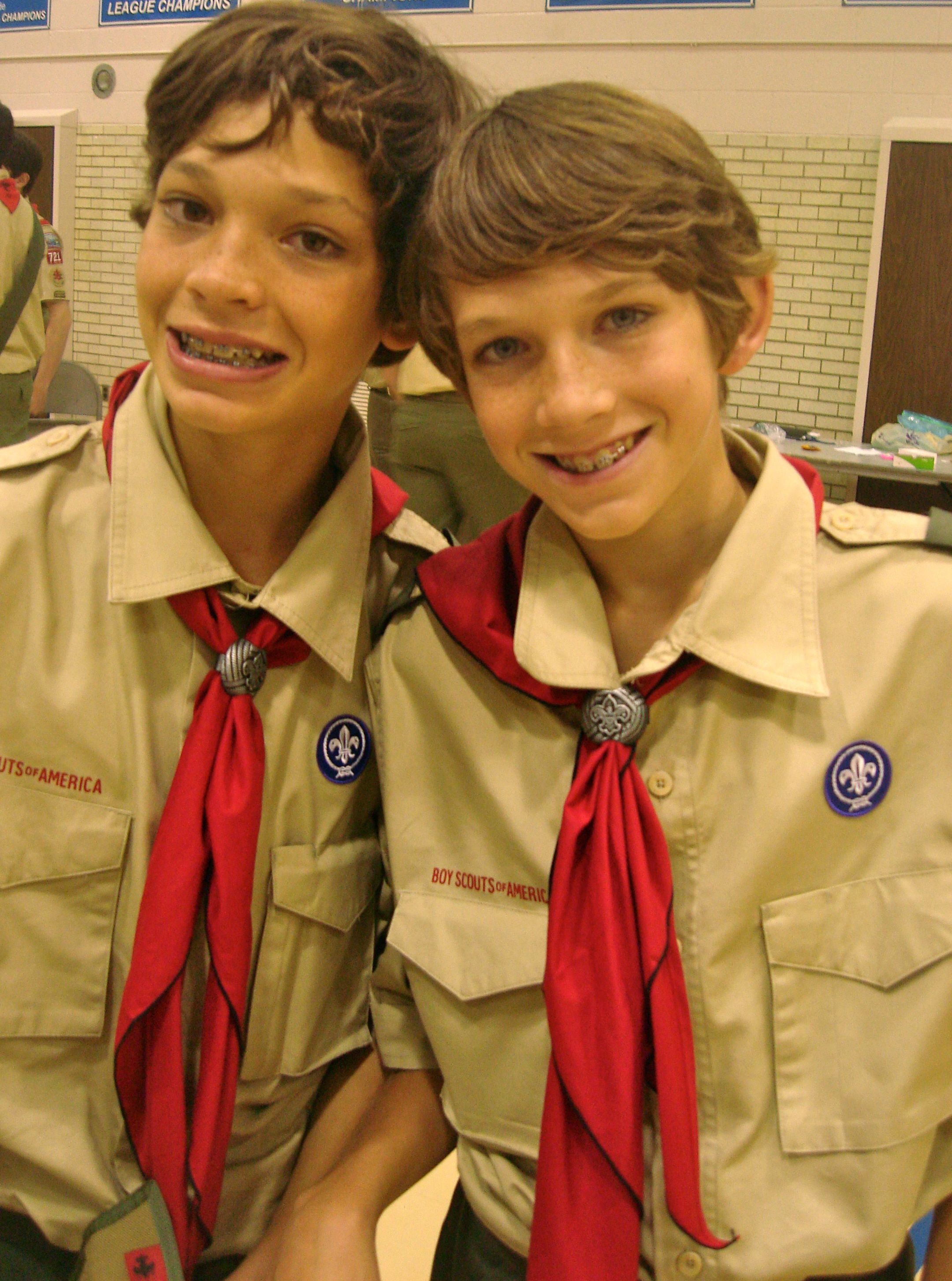
We attended a Court of Honor for the local Boy Scouts.  At this event boys received merit badges for a variety of positive behaviors and beneficial skills learned.  They earned awards for learning to build fires, for learning safety procedures during natural disasters and for helping the community through charitable contributions and personal efforts to educate and assist the less fortunate.

Here in 2011 boys were being publicly rewarded for learning to be self-reliant and learning to help others in need.  At the end of the evening the boys were instructed to clean the room and allow the adults to help themselves to dessert before they themselves stormed the dessert bar.

Our sometimes recalcitrant son, who looked increasingly worried by the high standards being set by others in the room, concluded the evening by saying,

“I want to help some of the older boys earn their Eagle Scout merit awards.”

I was floored.  I thought he would be ready to bolt.  Every boy had committed himself to spend hours learning difficult material and then days and weeks applying this knowledge to materially benefit their community. My son, who eschews hard work, was ready to sign up for extra credit!

I applaud the Boy Scouts for maintaining their traditions and values in the face of our secular and me-centric society.  Evidently the appeal of being useful has not faded.  These fortunate boys are being given the opportunity to actually be relevant in a modern world.  They are eager to learn and to be needed by their community.  They are directly rewarded on the most tangible basis: they can clearly see that they have directly improved the lives of those who are less fortunate. They can appreciate the need to learn self-reliant skills because these skills are immediately useful in their Scouting lives, personal lives and in their work to help others.

In short, the lessons and positive behaviors are immediately useful to the Scout.  Obvious relevance brings education alive.  I am so grateful to have the energy of these pre-adolescent boys channeled into a venue which rewards helping others above helping themselves.

History is the Study of Lives, not Events

"Those who cannot remember the past are condemned to repeat it."

George Santayana, also invoked by Winston Churchill

Napoleon, Empereur de francais…

A typical history course is one which follows a fairly straight forward, chronological, path through a series of wars and various social and cultural upheavals. This approach to the subject of history can be uninspiring to the young student. When I first began homeschooling I searched for a good history curriculum and was surprised (not really) that the textbooks where dull and the "story" moved intractably from one violent event to the next with little human empathy or emotion being imparted to the reader.

Inevitably I found that I needed to create my own curriculum if I wanted to get my students' attention. In the past 6 years we have studied the ancient Egyptians, the ancient Greeks and Romans, the history of China from 1000 b.c. through Mao and the Cultural Revolution to the present, the history of Japan, the American Revolution, slavery and the Underground Railroad, World War I, the inter-war years and World War II, and at least another dozen sub-topics.

I have found that the best approach is to start with a simple skeleton or outline of the basic facts. This is reinforced by having my students create their own timelines of the key events. For this we have used long rolls of paper that stretch across the room. The timeline can be marked with measurements reflecting the desired time intervals. The students then write draw and create a collage of events, images and accomplishments from that section of history. We have also used printed book timelines that allow multiple timelines to be created on the same page so that various events from around the globe can be compared and the student can appreciate the different events that were occurring simultaneously. We have also used digital timelines that create the same effect but allow for uploading images and films to create a newsreel effect.

I have found, not surprisingly, that the best materials are the primary sources. When we are able to read a first person account of an event then the moment truly becomes "alive." Suddenly it is apparent that real people have lived and thought and tasted these events. We care about the event because we care about the people. Wasn't that the whole point anyway?

We have also had great success reading literature, seeing theatrical pieces and visiting museums. All these resources give a sense of how the past is both similar to and different from the present. We always consider the questions, "How is this similar to today?" and "In what ways are these issues still affecting our society?" also, "Is our culture really different or have these driving forces just manifested themselves differently?"

Ultimately we still turn to respected historical resources for information and analysis. After doing so much of our own research these texts provide real benefit. The student can discern from what viewpoint the text has been written and can evaluate which information has the most value. The study of history becomes the study of our lives and our predecessors, and as such, the study of history becomes indispensable to our study of humanity.

Powered by Plinky

The Big E Captures the Romance of the Country Fair

A recent visit to the Big E, Eastern States Exposition, gave our 21st century urban children the opportunity to experience a good old fashioned country fair.  We visited farm stands, tasted cream puffs, rode on an elephant, saw real farm animals (I know to some that may sound mundane), rode on real farm tractors and went on as many spinning ferris wheels and roller coasters as possible.  Oh..and saw the most amazing one ring circus in which each act really was death defying and heart stopping. 

Bounce and Quantum may now believe that goats and camels reside happily side-by-side on most American farms.

Riding on an elephant is not nearly as easy as one would imagine when reading the Arabian Nights.

Watching piglets nurse and eggs hatch was endlessly fascinating to our urban-suburban group, most of whom are only familiar with cats and dogs and assume all pigs and spiders are friends, like Wilbur and Charlotte.

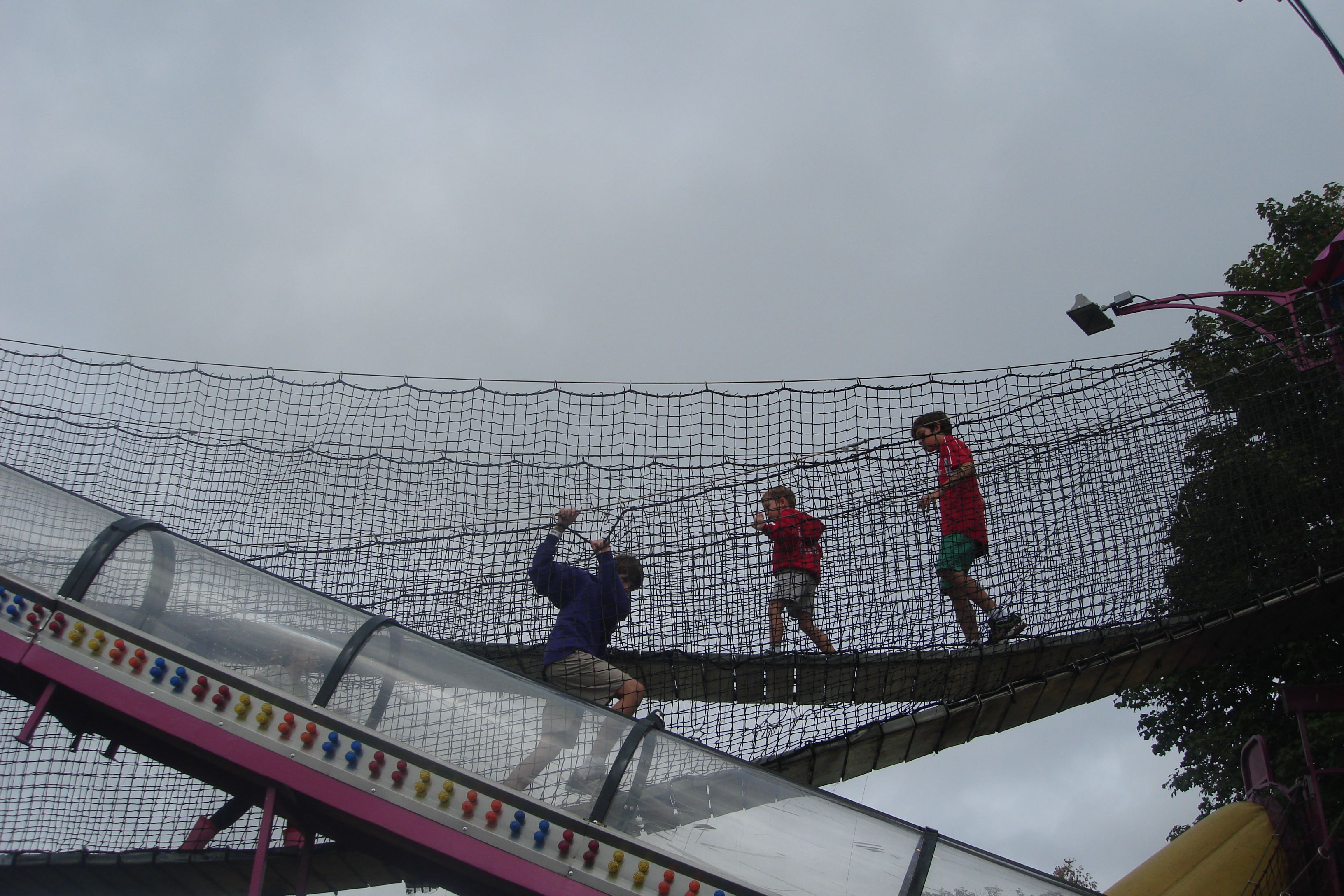
Of course nothing can compare with chasing one another through nets and tubes 100 feet above the ground.

Except, perhaps, riding high on a swing hundreds of feet above the earth.

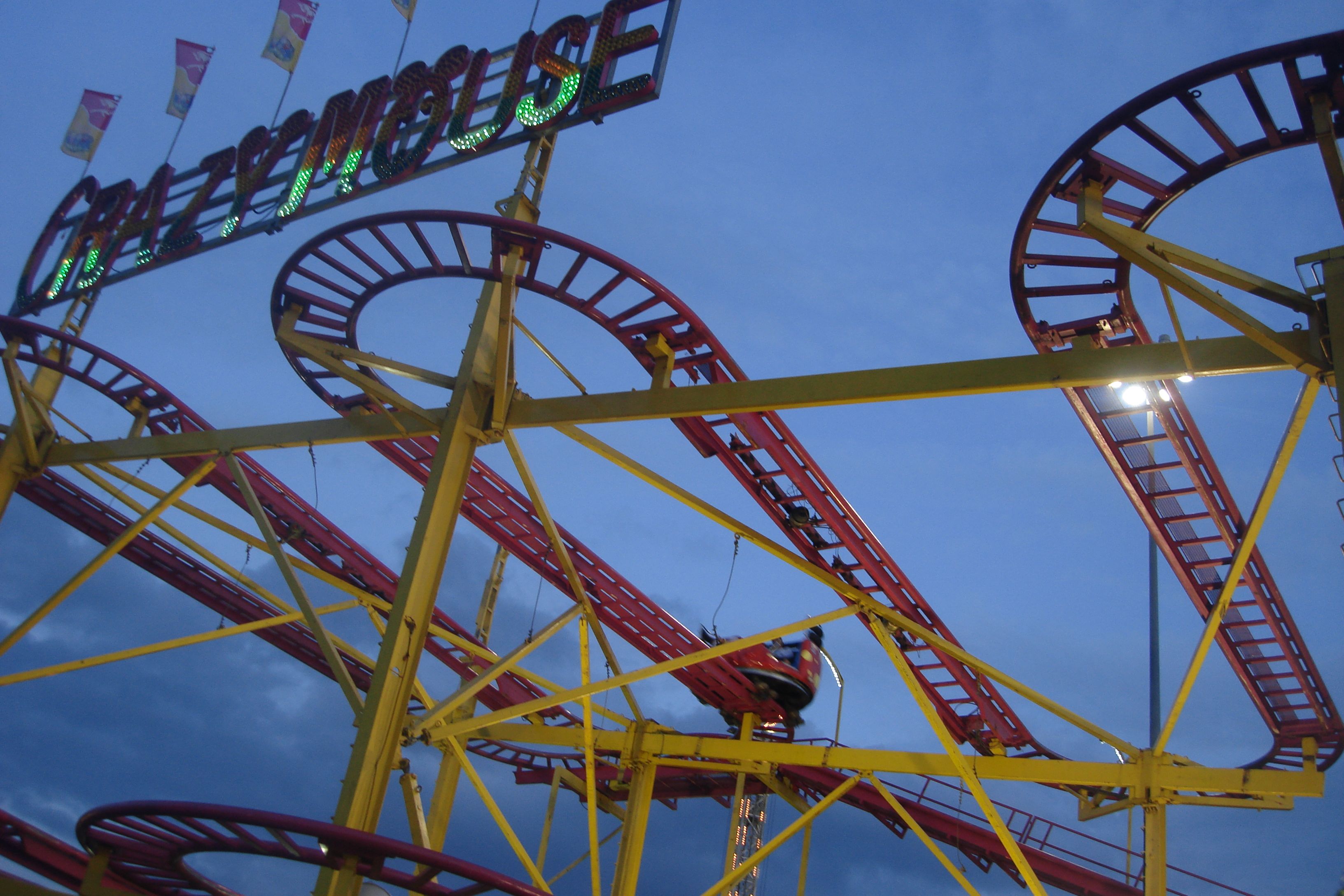
Crazy Mouse at dusk: this was everyone’s favorite ride.

It was a beautiful day, made even more magical by sunset.  This was certainly a “naturally inspiring” lesson in our ongoing study of early American History.  Don’t worry, another day will be filled with proper lessons, notes and quizzes. But today will remain in all our memories as a tour of old-fashioned Americana, and of good plain fun, along the scale of Wilbur and Charlotte’s country fair.