Witch Trip to the Past: Salem, MA

We entered the small town of Salem in search of witches and real life mentions of the characters from the Henry Miller play, The Crucible.

Scooter in the rain, Salem, MA (Allia)
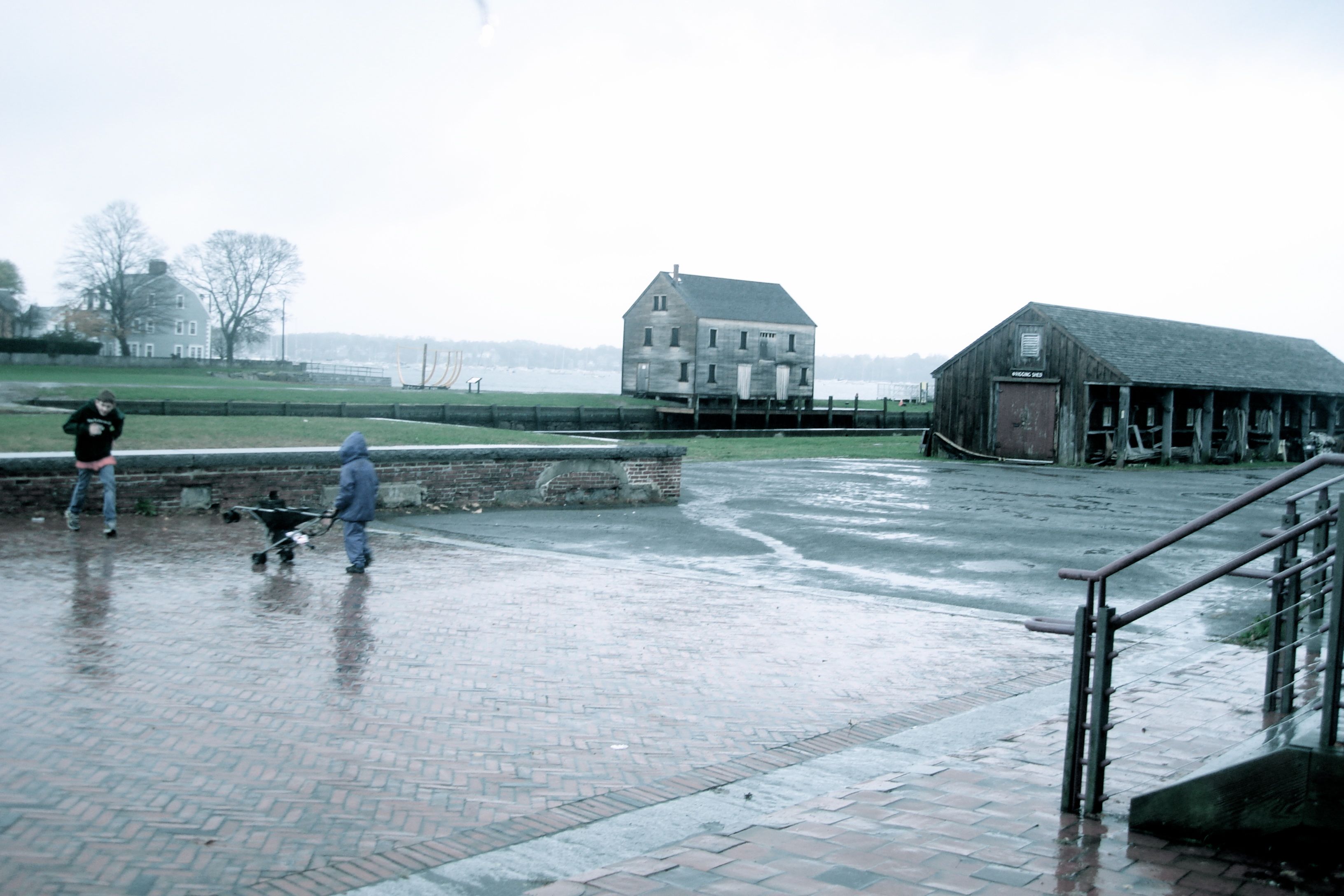
Truth and Scooter explore Salem Harbor (Allia)

The day was appropriately rainy and gloomy, a perfect match for the mystery we were seeking.  How did this small town, in 1692, bring itself to hang 20 innocent people?  Why did mass hysteria combine with greed and zealous righteousness to allow the “establishment” to commit unthinkable crimes against the people they were suppose to be protecting?

Creatress surveys the marsh, Salem, MA (Allia)

We began our investigation at the birthplace of Nathanial Hawthorne, author of (among other works) The Scarlet Letter and The House of the Seven Gables.  The house was small and plain, like many old New England homes.  During his beginning forays into authorship, Hawthorne was a recluse within this home.  He was insecure and preferred to keep his attempts at writing a secret from his neighbors.  Local legend believes that Hawthorne, originally a Custom House official, was inspired to begin writing after an encounter with a ghost.
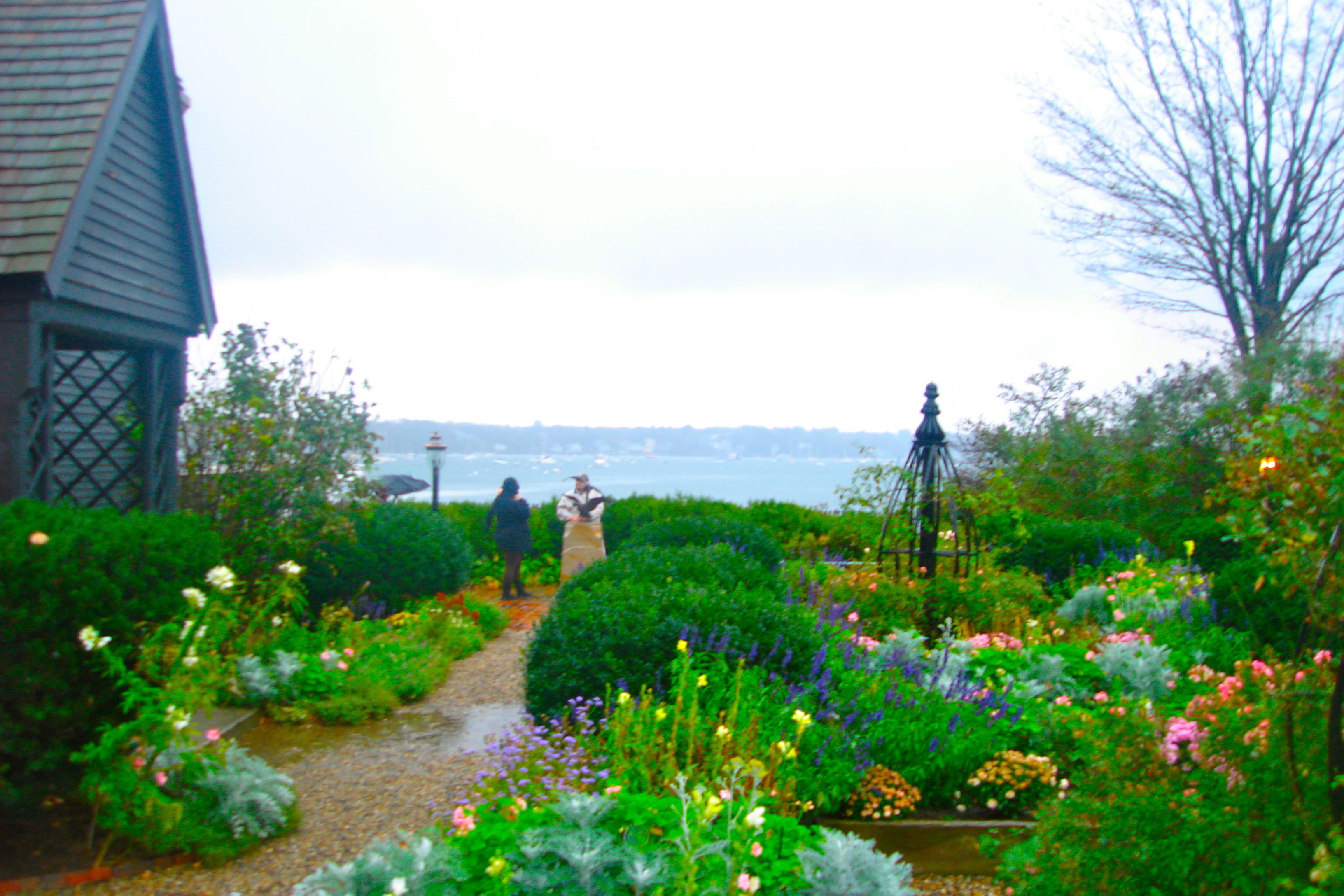
The House of the Seven Gables, Salem, MA (Allia)

The second home we visited was that of Nathanial Hawthorne’s cousin.  It is believed that this is the house he used as inspiration for the setting of his mystery novel, The House of the Seven Gables. This house has been restored to enhance its similarity to the Hawthorne’s novel.  It includes a secret staircase that winds around an interior chimney and allows characters (and tourists) to make surprise entrances into various rooms.

Salem graveyeard (Allia)

Hawthorne is the great-great grandson of John Hathorne, the judge who infamously presided over the Salem Witch Trials, condemning so many people to their deaths.  In his preface to The House of the Seven Gables Hawthorne asks if the evil deeds of one’s ancestors reverberate upon future generations.
Speaking in the third person, Hawthorne provides us this insight into his thinking: The author has provided himself with a moral – the truth, namely, that the wrong doing of one generation lives into the successive ones…he (Hawthorne) would feel it a singular gratification if this romance (novel) might effectually convince mankind – or, indeed, any one man – of the folly of tumbling down an avalanche of ill-gotten gold, or real estate, on the heads of an unfortunate posterity. Preface from The House of the Seven Gables

It is probable that Hawthorne is referring to himself.  Hawthorne’s themes often “center on the inherent evil and sin of humanity, and his works often have moral messages and deep psychological complexity.”  The Scarlet Letter exposes the injustice of morality as it is applied to young women during the Puritan era.  We are now eager to read The House of the Seven Gables.

The grave tour was fascinating and creepy.

Salem graveyard (Allia)
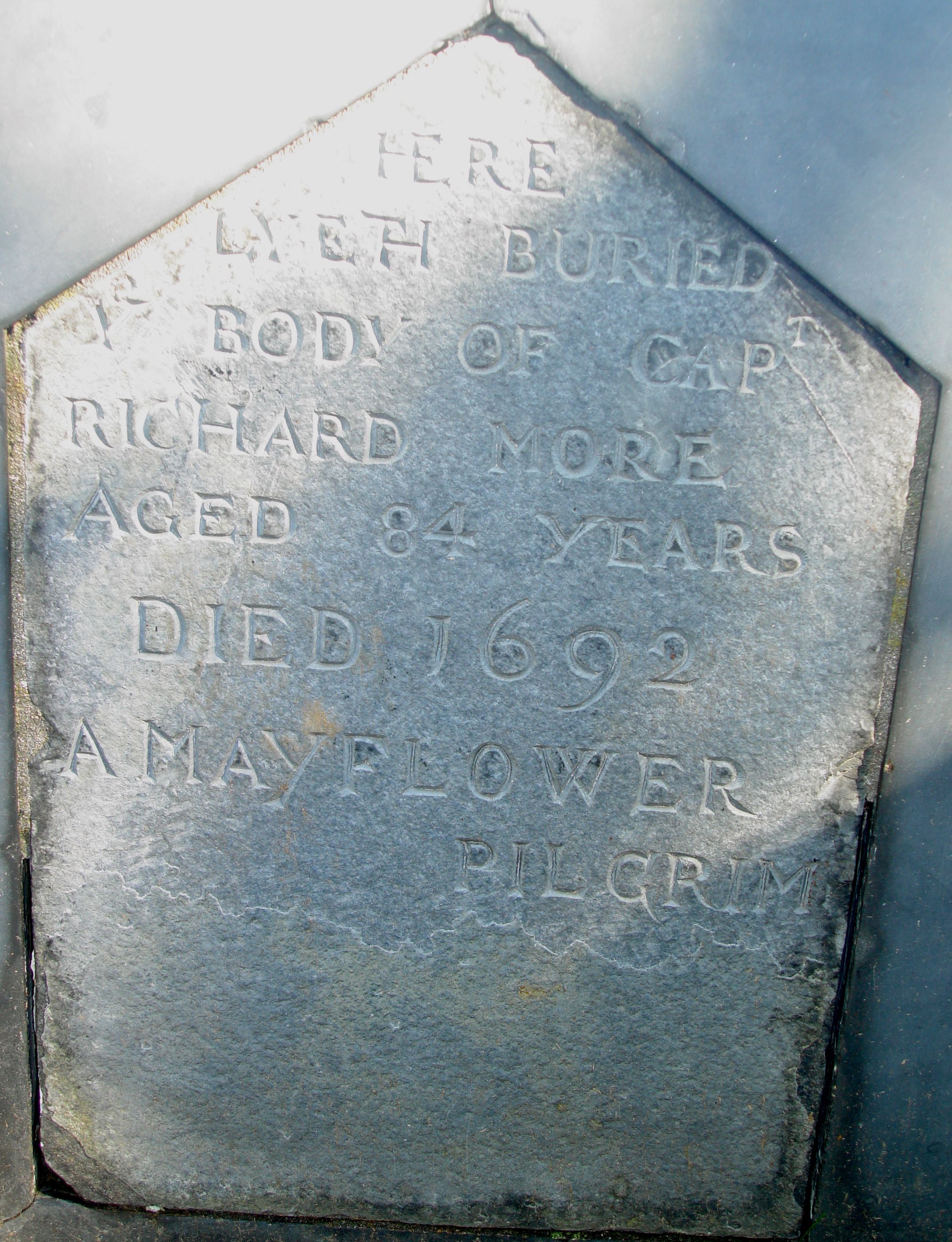
Tomb of Mayflower Pilgrim, Salem, MA (Allia)

We enjoyed seeing John Hathorne’s grave as well as the gravestone of an original Mayflower Pilgrim.
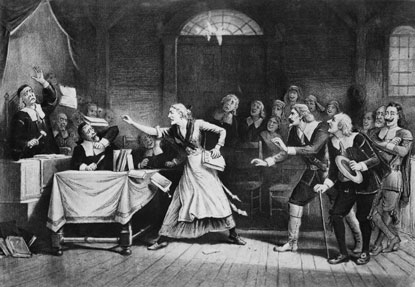
We also saw the Salem Witch Memorial of the 20 men and women that were hanged in 1692.  Here is where we found the Crucible characters come to life (or death).

Lest Terror Be Forgotten

June 10, 1692

Bridget Bishop”I am no witch.
I am innocent.
I know nothing of it.”

July 19, 1692

Sarah Wildes Elizabeth Howe”If it was the last moment I was to live,
God knows I am innocent…”
Susannah Martin”I have no hand in witchcraft.” Sarah Good
Rebecca Nurse”Oh Lord, help me! It is false. I am clear. For my life now lies in your hands….”

http://www.salemweb.com/memorial/

Salem gardens (Allia)

Happymess kids were fascinated with the idea that they could walk on the very same streets and visit the same homes where so many famous events occurred.

Let Me Count the Days:  Homeschooling is visiting the past in the present.

Why I Homeschool: Let Me Count the Days

Have you ever encountered that blank stare when you explain that you teach your children at home?  It seems that homeschooling can be a difficult concept for some ordinary folks to grasp.

Homeschool: anywhere we happen to be...NM, Allia

At Happymess we have been homeschooling for the past 6 years, and we have loved every minute.  Yes, there have been some difficult days.  And yes, there have been some days that have been less than productive.  But isn’t that always the case?  In general, we have been happy and busy.  We have been learning at home and enjoying the company of one another.  It has been an adventure and a blessing.

Happymess kids Study the Mechanics of Flight

So what is homeschooling (for the uninitiated)?  Happily, homeschooling is different for every single family.  I think this is one of my favorite things about homeschooling.  We can all do it whatever way we want.  This is why homeschoolers make some of the most interesting friends.

Some of us follow specific curriculums, some allow the child’s interests to lead the way and some balance several different approaches.  Homeschool Happymess is in the later category.  We carefully select our topics, choose the best program or book for each topic and combine that with regular “real life experiences” that bring the topic to life.  Our goal is to inspire the student.

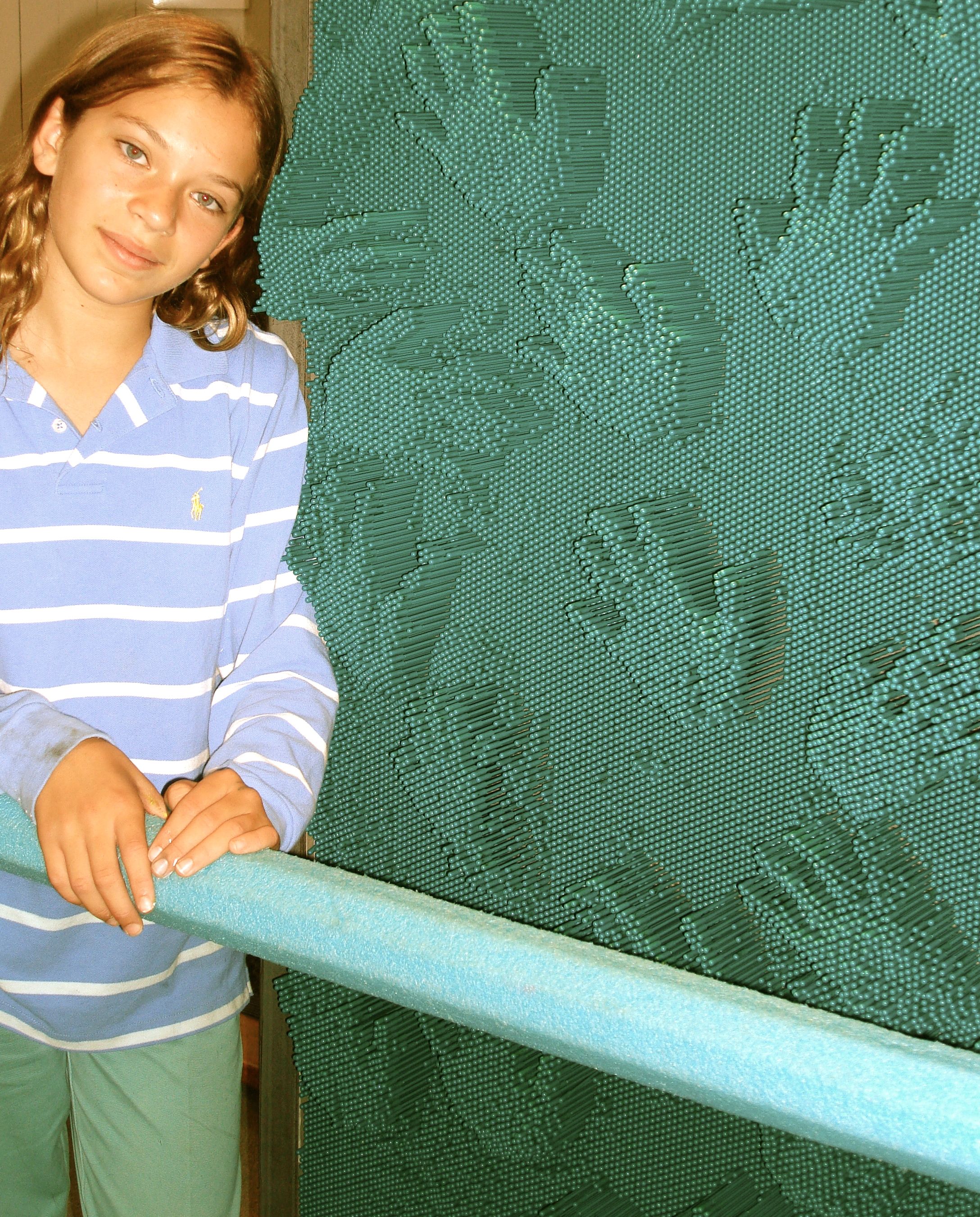
Hands-On Learning, NM, Allia

Dare I take the mystery out of homeschooling?  Homeschooling is, simply, teaching your child at home.  It provides the opportunity for positive family relationships.  Homeschooling allows you to focus on the topics and values that you find most important.  When you teach your children at home you can ensure that they actually learn the material, this is one of my favorite aspects of homeschooling.

Like good home cooking, homeschooling allows you to choose the intellectual nutrients that will create a balanced diet and will allow your children to grow and develop into responsible and loving members of their community.

Let Me Count the Days:  Homeschooling is anytime you take responsibility for teaching your child, whether or not they are enrolled in school.  Learning something at home is for every family.

Writing Assignment: Seeing Myself Through the Eyes of Another

Happymess kids are learning to write.  This week Quantum is completing an assignment in which he has to describe himself (in the third person) through the eyes of a grandparent.  Through this process he will additionally be describing the grandparent and will introduce the reader to Quantum as perceived by the grandparent.  Thus, some of Quantum’s positive attributes may be viewed negatively and some seemingly unimportant moments may be accentuated due to the values of the grandparent.

,This story is a fictionalization of an actual encounter, in a restaurant, between Grandfather and Quantum.  Grandfather is delighted that Quantum is dressed appropriately but does not think children should receive too much attention or praise.  This piece is both comical and sad as the two males, at either end of the age spectrum, miscommunicate and misjudge one another.  The opportunity for mutual appreciation is certainly lost through this encounter.  Quantum effectively uses fictionalization to emphasize the mood he strives to create.

Quantum eagerly attempts to share his interests and accolades while Grandfather dismisses these attributes with sharp-tongued staccato remarks designed to remind Quantum of his more junior place at the dinner table.

Said by Quantum, admiringly,  “Grandfather, did you ever get to see Babe Ruth?”

“My father wouldn’t have cared if Babe Ruth was sitting in the backyard!” Grandfather retorts, disparagingly.

Through this exercise Quantum is learning the craft of character description, setting and the use of dialogue and innuendo to create an effective and moving scene.  This writing exercise builds upon real world facts while allowing extensive room for creativity.  The students’ sense of security is enhanced in that initially they are reporting on known events.  The focus on pure creativity is reduced.  As the tale unfolds the student is free to rearrange the details as she/he learns to use words to illustrate the tale.

Garth Williams

This assignment helps to bridge the gap between reality and fiction.  It also helps to illustrate the manner in which fiction can be more truthful than facts.  Sometimes a fictional portrayal of an event more closely reassembles the truth, as perceived by the individual.  Third person self-description in an excellent introduction into the craft of fictional character development and can be employed in a writing program designed for any age student.

Would you be interested in using this technique to expand the writing skills of your students?

What techniques have you used effectively?

Pinocchio: A Captivating Cautionary Tale for Read-Aloud Bedtime

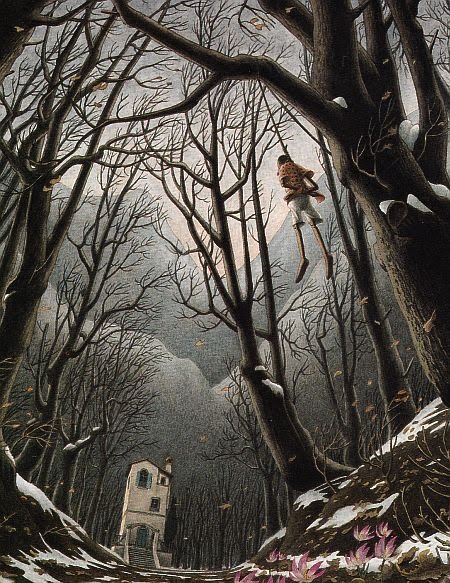
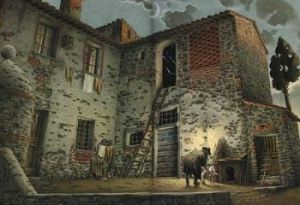
We are not talking about the Disney reincarnation of Pinocchio, a brightly clad young puppet closely resembling Mickey Mouse, who hops about from one misadventure to another.  We are talking about the original, unabridged, version by Carlo Collodi.  I recommend the 1988 Alfred A. Knopf edition illustrated by Roberto Innocenti. The translation is lovely and the vocabulary is challenging but easily understood in context.  What really makes this edition so compelling for young and middle level readers are the illustrations.  Roberto Innocenti’s illustrations are breathtaking.  These are not beautiful pictures.  They are morose, macabre and slightly disturbing.  Children are completely enthralled by the images.  The pictures perfectly complement the edgy dangerous mood of this cautionary tale.

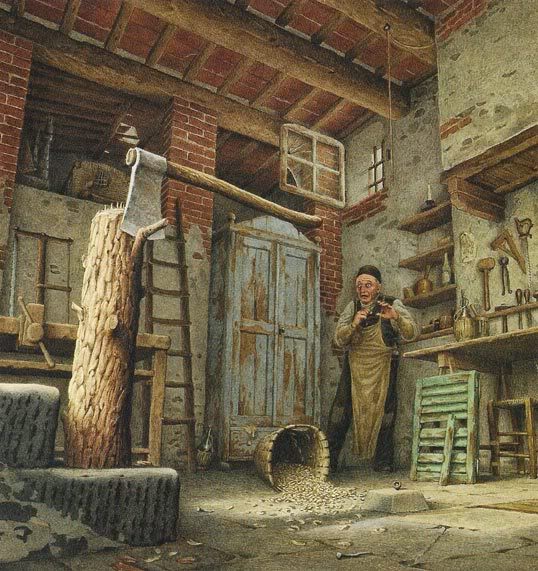
Roberto Innocenti

Here is the original block of wood from which Pinocchio is carved.  The wood maker is shocked to hear the wood crying out in pain each time he attempts to chop it into bits.  In great haste he gives this wood away to Geppetto who will carve the famous puppet from this magic wood.

Roberto Innocenti

Despite Pinocchio’s repeated bad behavior he does have a repenting heart and this is an endearing characteristic.  Here Pinocchio begs the Showman to take his life and spare the life of the Harlequin.  The Showmaster spares them both and Pinnochio has another chance to improve his behavior.

Pinocchio sets off with the best intentions and plans to reconnect with his loving father, Geppetto.  Unfortunately, he is accosted by the wily fox and cat who entice him into burying his gold pieces in the Field of Miracles.

Roberto Innocenti

Let us just say that this encounter leads to nothing but profoundly poor fortune.  Fortunately Pinnochio’s luck will prevail and his ever-repenting nature will continue to procure him a new chance to get on the path toward righteousness.

Roberto Innocenti

Having finally procured his freedom, Pinocchio is once again on his way to see his father.  In his hurry and hunger, having recently escaped from prison, Pinocchio stops to steal some grapes.  He is apprehended and forcibly employed as a guard dog for the local farmer.  His excellent job as an honest guard dog causes the grateful farmer to set Pinocchio free.

Bounce and Scooter reading Pinocchio

This is one of the best read-aloud bedtime stories.  Each night Bounce and Scooter hurry-hurry-hurry to get into bed so we can continue with the Pinocchio story.  They immediately identify with Pinocchio and his bad-boy antics.  They are not disturbed by his predicaments.  They have confidence that he will learn to behave himself and will be redeemed by the end of the story.  Pinocchio, like all  classic tales, has a clear message and honestly reflects the emotions and actions of real-life boys and girls.  This is an eminently satisfying tale of the battle between right and wrong.  Bounce and Scooter know that right will prevail, but it is so much fun to watch Pinocchio easily being mislead in the meantime.

The Phantom Tollbooth: A Novel Approach to Vocabulary Lessons

The Phantom Tollbooth, by Norton Juster, is a modern day classic novel perfect for middle level readers whom you hope to inspire with the desire to expand their verbal and imaginative horizons.

IMG_2120

In this fairytale-style novel a young boy, Milo, who is bored with life is given the whirlwind opportunity to have a mind (and vocabulary) expanding adventure. Milo receives the gift of a Phantom Tollbooth. This tollbooth allows Milo to enter a magical world that features ridiculous puns and verbal idioms come to life. Milo jumps to the Land of Conclusions, meets Grow Downs, the adults of the future (children who have not yet “grown-down” to their future height), and meets such dire characters as the Senses Taker. Through Milo’s misadventures and efforts to save two princesses, Rhyme and Reason, he learns to value knowledge and ultimately appreciate all of life’s varied experiences. The Phantom Tollbooth not only introduces a vast array of oddities of the English language, it also uses an extensive vocabulary that focuses the reader on the importance of word variety.

This is a great book to read on an electronic reader as your student may not be familiar with the meaning of many of the words. It is very encouraging to be able to immediately look up the meaning of a word and see the definition in the context of the text so as to understand how the word is used. Since many of the words are used humorously, middle level readers are thrilled to learn the meaning of the word so that they can “get the joke”.

The Phantom Tollbooth is a funny, tongue-in-cheek adventure novel that promotes knowledge of letters and numbers above ignorance. Milo escapes from the Doldrums, both in his own life and in his novel world. This is a valuable and enjoyable allegorical tale for our modern children.

Powered by Plinky

History is the Study of Lives, not Events

"Those who cannot remember the past are condemned to repeat it."

George Santayana, also invoked by Winston Churchill

Napoleon, Empereur de francais…

A typical history course is one which follows a fairly straight forward, chronological, path through a series of wars and various social and cultural upheavals. This approach to the subject of history can be uninspiring to the young student. When I first began homeschooling I searched for a good history curriculum and was surprised (not really) that the textbooks where dull and the "story" moved intractably from one violent event to the next with little human empathy or emotion being imparted to the reader.

Inevitably I found that I needed to create my own curriculum if I wanted to get my students' attention. In the past 6 years we have studied the ancient Egyptians, the ancient Greeks and Romans, the history of China from 1000 b.c. through Mao and the Cultural Revolution to the present, the history of Japan, the American Revolution, slavery and the Underground Railroad, World War I, the inter-war years and World War II, and at least another dozen sub-topics.

I have found that the best approach is to start with a simple skeleton or outline of the basic facts. This is reinforced by having my students create their own timelines of the key events. For this we have used long rolls of paper that stretch across the room. The timeline can be marked with measurements reflecting the desired time intervals. The students then write draw and create a collage of events, images and accomplishments from that section of history. We have also used printed book timelines that allow multiple timelines to be created on the same page so that various events from around the globe can be compared and the student can appreciate the different events that were occurring simultaneously. We have also used digital timelines that create the same effect but allow for uploading images and films to create a newsreel effect.

I have found, not surprisingly, that the best materials are the primary sources. When we are able to read a first person account of an event then the moment truly becomes "alive." Suddenly it is apparent that real people have lived and thought and tasted these events. We care about the event because we care about the people. Wasn't that the whole point anyway?

We have also had great success reading literature, seeing theatrical pieces and visiting museums. All these resources give a sense of how the past is both similar to and different from the present. We always consider the questions, "How is this similar to today?" and "In what ways are these issues still affecting our society?" also, "Is our culture really different or have these driving forces just manifested themselves differently?"

Ultimately we still turn to respected historical resources for information and analysis. After doing so much of our own research these texts provide real benefit. The student can discern from what viewpoint the text has been written and can evaluate which information has the most value. The study of history becomes the study of our lives and our predecessors, and as such, the study of history becomes indispensable to our study of humanity.

Powered by Plinky

Literature as a Window on History: The Crucible

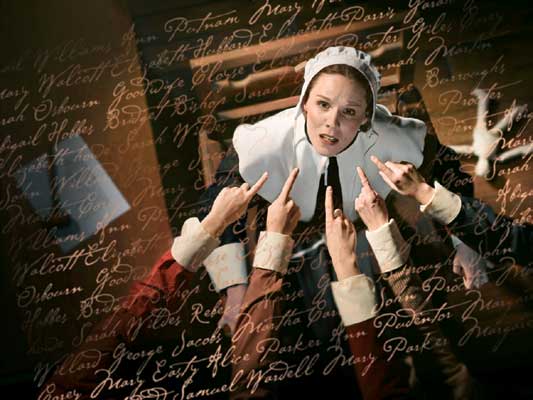
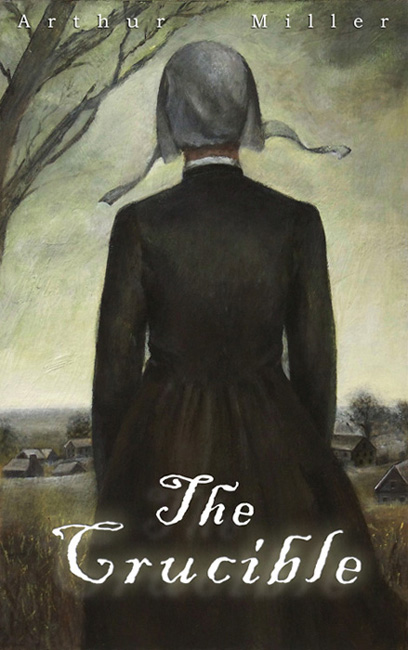
We are opening our school literature season with a reading of the play, The Crucible by Henry Miller.  This play, written in the 1950’s, revisits Salem Massachusetts at the time of the Salem witch trials.   Today we discussed the nature of the insular Puritan society and the perceived impropriety of two girls caught dancing in the woods.  We discussed the ease with which a small lie can escalate into a communal lie and how quickly a community can rush to persecute the individual, in particular to protect itself from humiliation, or in this case, death.

This play was produced during the era of McCarthyism and ominously warns of the dangers in fearing the unknown and in erroneously accusing others. The notorious witchhunts of the 1950’s ruined the careers of many artists and playwrights as they hastened to defend themselves against accusations of Communism.

We talked about modern applications and the efforts that we make today to avoid these types of global persecutions.  The Crucible portrays fear, persecution and the phobic need for continuity of the current society as unfortunate aspects of the human condition.

Lights Out after Irene

We are still in the dark one week after Hurricane Irene and the Happymess kids are surprised at how many things in our home require electricity:  everything!

Sometimes it is more fun without lights!

One question that the kids keep asking is, “When will the power come back?”  It leads one to wonder what people did in the days before electricity was invented, which, contrary to my childrens’ belief, really wasn’t too long ago.

And, speaking of kids and electricity, this website was created by a team of high schoolers for the National History Day competition: http://89716929.nhd.weebly.com/ This site explores the Rural Electrification Act and the process of electrifying America.

Once again I find myself inspired by what kids can create.

Classic Children's Literature: The Gateway to Literacy

Reading is the key to literacy. A good book will capture your students' imagination. Their natural curiosity and determination to "find out what happens.." will take care of the rest. But not all books are created equal..

knuckle down

One of the best ways to inspire a young student is to provide high quality children's literature as standard reading material. Classic literature, like Tom Sawyer, Little Women or A Secret Garden all have common elements. They contain universal messages within the framework of everyday childhood experience. Through description and detailed dialogue today's children can understand the past and can relive difficulties that children from earlier decades have faced. Everyday obstacles are overcome with out resorting to magic or super powers but through human ingenuity and perseverance. Most importantly, the complex linguistic style and expressive vocabulary utilized in classic children's literature provide today's student with the ability to read, comprehend and ultimately write at a more sophisticated level. Additionally, the classics are fun. Once your student becomes accustomed to the reading level they will adore these amazing tales of adventure and childhood accomplishment.

Powered by Plinky